
technology, sourcing & data governance review
2025 annual report
Chapter 1: Deep Dive Data Governance & Privacy
1.1: The Cross-Border Data Transfer Deadline: Navigating the Final Transition to Modular Frameworks
1.2: The Prohibited AI System Deadline: Managing Market Bans and Algorithmic Compliance
1.3: The SEC Cyber Incident Disclosure Wave: Meeting Strict Corporate Transparency Mandates
Chapter 2: Digital Solutions, Transformation & Tech Ecosystems
2.1: The General Purpose AI (GPAI) Governance Deadline: Implementing Lifecycle Compliance and Code of Practice Standards
2.2: The EU Data Act Implementation: Breaking Proprietary Silos and Mandating Access-by-Design Interoperability
2.3: Cloud Provider Switching Mandates: Eradicating Infrastructure Lock-In and Outbound Data Fees
Chapter 3: Software Development, Integration & Enterprise Licensing
3.1: The Open-Source Software Supply Chain Mandate: Managing Product Liability and Attestation Standards
3.2: Automated Code Generation Governance: Balancing AI Intellectual Property and Indemnification Risks
3.3: Enterprise SaaS Licensing Overhauls: Managing Multi-Tenant Compliance and API Usage Audits
Chapter 4: Strategic Sourcing & Commercial Transactions
4.1: Global Supply Chain Due Diligence Mandates: Integrating Upstream Corporate Accountability and Traceability Standards
4.2: Geo-Economic Sourcing Redundancy: Managing Nearshoring Transitions and Contractual Exit Strategies
4.3: Outbound Investment Screening and Tech Transfer Controls: Navigating the New Architecture of Cross-Border Commercial Transactions
Chapter 1: Deep-Dive Data Governance & Privacy
1.1 The Cross-Border Data Transfer Deadline: Navigating the Final Transition to Modular Frameworks
International business operations face immediate compliance risks as global regulatory authorities conclude their transition windows for cross-border personal data transfers. Legacy contractual frameworks, which previously allowed companies to move data across borders under transitional rules, have been completely phased out.
For multinational companies utilizing centralized cloud systems, offshore development centers, or international vendor networks, the expiration of these grace periods means that any data transfers still relying on outdated agreements are legally unauthorized.
Regulatory bodies are now actively auditing corporate data flows. They focus heavily on high-volume sectors like financial technology, healthcare platforms, and global retail systems. Under frameworks like the GDPR and equivalent international statutes, the penalties for unauthorized data transfers can reach up to 4% of global annual turnover or €20 million, whichever is higher.
Furthermore, data protection authorities possess the direct power to issue immediate data processing halts. This can instantly disrupt cross-border business models and cut off access to vital operational software.
To address this exposure, legal operations must move away from generic data processing addendums and implement the updated modular system. This modular structure requires transactional lawyers to precisely classify the data relationship for each individual transfer pathway. This choice must be selected from four distinct operational scenarios:
Module 1 (Controller-to-Controller): For independent data entities determining their own processing purposes.
Module 2 (Controller-to-Processor): For enterprise clients transferring data pools to external cloud or service vendors.
Module 3 (Processor-to-Processor): For primary vendors outsourcing specific computational tasks to sub-processors.
Module 4 (Processor-to-Controller): For specialized international processing hubs sending data back to a localized entity.
Cross-Border Audit Protocol
MAP DATA FLOWS. Identify all overseas endpoints.
CLASSIFY ROLES. Assign Module 1, 2, 3 or 4.
EXECUTE TIA. Assess destination local laws.
APPLY TRMS. Implement encryption/pseudonymity.
Comprehensive Compliance Checklist
Identify Data Exporters: Map every cross-border data transfer pathway across all corporate subsidiaries and third-party vendors.
Execute TIAs: Conduct formal, documented Transfer Impact Assessments (TIAs) for every destination country lacking an official adequacy decision.
Verify Local Encryption: Confirm that destination servers utilize technical controls, such as regional encryption keys, to prevent unauthorized access by local authorities.
Incorporate Modular Agreements: Formally execute the correct modular clauses into all master software and service agreements.
1.2 The Prohibited AI System Deadline: Managing Market Bans and Algorithmic Compliance
The formal conclusion of the grace periods under international artificial intelligence frameworks marks the transition from theoretical governance to direct market enforcement. Regulatory enforcement bodies now possess full authority to police, penalize, and ban software systems that do not meet strict ethical and risk-based standards.
If your organization develops, licenses, or integrates automated decision-making software or predictive machine learning models, you must verify that your tech stack contains no prohibited practices.
The current enforcement regime targets specific categories of algorithmic software deemed to present an unacceptable risk to individual safety and fundamental rights. Software systems utilizing manipulative subliminal techniques to influence user behavior, untargeted biometric scrapers building facial recognition databases, and predictive algorithms used for social scoring or automated behavioral profiling are banned from the commercial marketplace.
Failing to remove these prohibited systems carries the highest tier of financial penalties under modern digital regulations, often exceeding the standard caps set for data privacy breaches.
For technology executives and product managers, this deadline requires a thorough review of all active and pipeline software products. Even if an enterprise does not intentionally deploy manipulative software, legacy code fragments or third-party analytics plug-ins can accidentally trigger these statutory prohibitions.
For instance, automated customer engagement systems that use behavioral tracking to manipulate user purchasing choices or recruitment software that automatically categorizes candidates based on unconsented biometric signals must be taken offline and re-engineered immediately.
Algorithmic Risk Classification
Prohibited Risk. Subliminal, Biometric, Social Sells. —> Immediate Deletion Mandatory
High Risk. Hiring, Credit, Medical Diagnostics. —> Requires Human-in-the-Loop
Limited Risk. Generative Chatbots, Customer Text. —> Requires Transparency Notice
Comprehensive Compliance Checklist
Audit Algorithmic Models: Review all proprietary and licensed machine learning models to screen for prohibited profiling techniques.
Decommission Prohibited Features: Immediately remove any software functionality that relies on untargeted biometric scraping or manipulative behavioral tracking.
Enforce Vendor Disclosures: Require all software-as-a-service (SaaS) providers to deliver written certificates of compliance confirming their tools contain no prohibited AI mechanisms.
Update R&D Guardrails: Train product engineering teams on forbidden development boundaries to prevent future product compliance blocks.
1.3 The SEC Cyber Incident Disclosure Wave: Meeting Strict Corporate Transparency Mandates
The U.S. Securities and Exchange Commission (SEC) has entered a phase of strict enforcement regarding corporate transparency following cyber security incidents. Regulators are actively prosecuting companies that issue generic, boilerplate disclosures or use vague language to minimize investor awareness of material breaches.
This regulatory shift requires corporate compliance, legal, and technical operations teams to coordinate closely. They must ensure that material security incidents are evaluated, documented, and reported within strict statutory windows.
The current enforcement standard relies on a strict definition of materiality. A cyber security incident is considered material if there is a substantial likelihood that a reasonable investor would consider it important when making an investment decision.
The SEC has made it clear that companies cannot delay public filing simply because a technical investigation is ongoing or because full remediation has not yet been achieved. Once a business determines that a breach has had, or is reasonably likely to have, a material impact on its financial condition or operational resilience, the clock begins ticking.
To meet these disclosure rules, companies must integrate their security operations center (SOC) alerts directly with corporate legal operations workflows. When a security incident occurs, the technical engineering logs must feed into a formal materiality evaluation process.
Public filings submitted via Item 1.05 of Form 8-K must provide clear detail regarding the nature, scope, and timing of the incident, as well as its practical impact on financial performance and client relationships. This must be handled carefully, without exposing technical code flaws that could invite further exploitation.
SEC Material Incident Timeline
T-0: Incident Detected —> Security Operations Triage
T-24 Hours —> Technical Materiality Audit
T-48 Hours —> Executive Committee Review
Item 1.05 Form 8-K —> Explicit Public Filing
Comprehensive Compliance Checklist
Establish Incident Frameworks: Construct written, step-by-step internal guidelines to determine the financial and operational materiality of network breaches.
Train the SOC Team: Ensure technical security teams understand the specific legal definitions of materiality and the mandatory reporting timelines.
Draft Modular Templates: Maintain pre-formatted disclosure templates that satisfy regulatory transparency mandates without compromising ongoing network defense.
Coordinate Vendor Notifications: Update vendor contracts to require all third-party cloud and sourcing providers to report data breaches to your compliance team within 24 hours of discovery.
Chapter 2: Digital Solutions, Transformation & Tech Ecosystems
2.1 The General-Purpose AI (GPAI) Governance Deadline: Implementing Lifecycle Compliance and Code of Practice Standards
International digital transformation strategies faced a structural shift following the formal conclusion of the grace periods for General-Purpose AI (GPAI) models. Regulatory focus shifted from high-level developer ethics to hard enforcement under new governance structures like the European AI Office. Enterprise tech stacks that deploy, license, or integrate foundational large language models (LLMs) or multimodal AI networks must verify total compliance with these mandatory operational standards.
The current regulatory enforcement regime targets transparency across the entire lifecycle of foundational software. Model providers must maintain and deliver comprehensive technical documentation detailing training data sets, downstream capability limits, and explicit copyright compliance summaries.
Furthermore, models flagged as presenting a "systemic risk" are subject to immediate, continuous monitoring mandates. These include mandatory adversarial testing, detailed model evaluation protocols, and structured reporting mechanisms for critical security incidents.
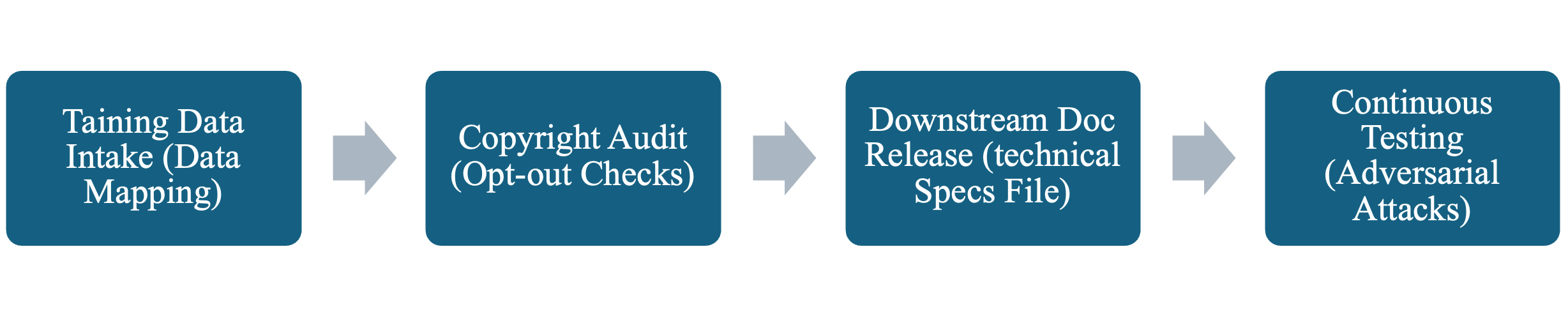
For digital strategy executives, this regime requires an immediate overhaul of procurement structures and vendor agreements. Enterprises cannot rely on software vendors' basic guarantees of compliance.
If downstream developers cannot access exact training limits or transparent operation logs from upstream suppliers, the entire deployment stack faces immediate processing halts and significant corporate fines. Product managers must transition away from opaque, "black-box" model layers to open, auditable foundational tools that meet the rigorous General-Purpose AI Code of Practice benchmarks.
General-Purpose AI Risk Tiering
Systemic Risk Models: Multi-billion parameter networks subject to mandatory adversarial testing and immediate incident logging.
Standard Foundation Models: General-purpose tools requiring detailed technical documentation and explicit data tracking sheets.
Downstream Integration Layers: Enterprise code utilizing external API keys, requiring clear transparency declarations for end-users.
Comprehensive Compliance Checklist
Audit Model Documentation: Verify that every integrated foundational model possesses up-to-date technical documentation detailing its capability parameters.
Enforce Copyright Disclosures: Require software providers to supply clear, auditable documentation regarding the copyright status of training data inputs.
Deploy Adversarial Workflows: Establish continuous, documented red-teaming and vulnerability testing for all enterprise-grade systemic risk models.
Update Vendor SLA Disclosures: Review software-as-a-service (SaaS) procurement contracts to guarantee instant data-flow visibility under the formal Code of Practice.
2.2 The EU Data Act Implementation: Breaking Proprietary Silos and Mandating Access-by-Design Interoperability
The formal entry into application of the groundbreaking EU Data Act completely rewired data ownership, portability, and access rights across all digital business ecosystems. This regulatory shift dismantles the exclusive, proprietary hold that tech providers and hardware manufacturers traditionally maintained over system logs and user data sets.
Any enterprise selling connected smart devices, internet-of-things (IoT) platforms, or industrial hardware must change its foundational infrastructure to guarantee direct data access to users and third-party recipients.
The core enforcement framework relies on a strict definition of "access-by-design" data portability. Data holders are legally prohibited from restricting user access to raw product data or related functional metadata.
If a business or consumer requests access to performance metrics or operations logs generated by their hardware, the data holder must provide this information immediately, continuously, and free of charge.

Furthermore, the regulation targets unfair contractual terms imposed by dominant software vendors. Unilateral contract clauses that block valid data-sharing agreements or shield tech providers from operational liability are legally void.
Corporate legal and engineering teams must coordinate to restructure software architectures. They must move away from locked, proprietary formats and establish standard, interoperable data APIs. Failing to open these access channels exposes firms to severe fines that match GDPR levels of up to 4% of global annual turnover.
Connected Device Data Structure
PRODUCT DATA Raw data streams generated directly by connected hardware components.
SERVICE DATA Operational records stemming from digital service integrations and companion apps.
METADATA Underlying system context required to interpret and port raw information feeds.
DERIVED DATA Proprietary analytics and internal corporate insights exempt from data-sharing requirements.
Comprehensive Compliance Checklist
Map All IoT Data Streams: Conduct technical audits across all smart devices and software tools to identify data fields within the scope of user portability.
Build Direct Data APIs: Implement automated data-export portals allowing users to seamlessly transmit operational logs to third-party providers.
Review Master Software Agreements: Strip out unfair contractual restrictions or exclusivity locks from all standard business contract templates.
Deploy Trade Secret Guardrails: Implement technical boundaries to ensure mandatory data-sharing does not compromise proprietary code or manufacturing secrets.
2.3 Cloud Provider Switching Mandates: Eradicating Infrastructure Lock-In and Outbound Data Fees
Regulatory enforcement has entered a strict phase targeting market anti-competitiveness within the cloud computing sector. New market access rules require cloud infrastructure providers, hyperscalers, and software-as-a-service (SaaS) networks to eliminate technical and financial barriers that prevent clients from switching vendors.
Consequently, standard cloud provider operations must be overhauled to eliminate steep egress fees and proprietary format blocks that historically forced vendor lock-in.
The enforcement threshold relies on complete data porting and functional equivalence across cloud ecosystems. Providers cannot penalize customers who choose to move their infrastructure workloads to competing platforms.
The regulatory standard dictates that data egress charges—fees applied to move data pools out of a cloud network—must be completely phased out.
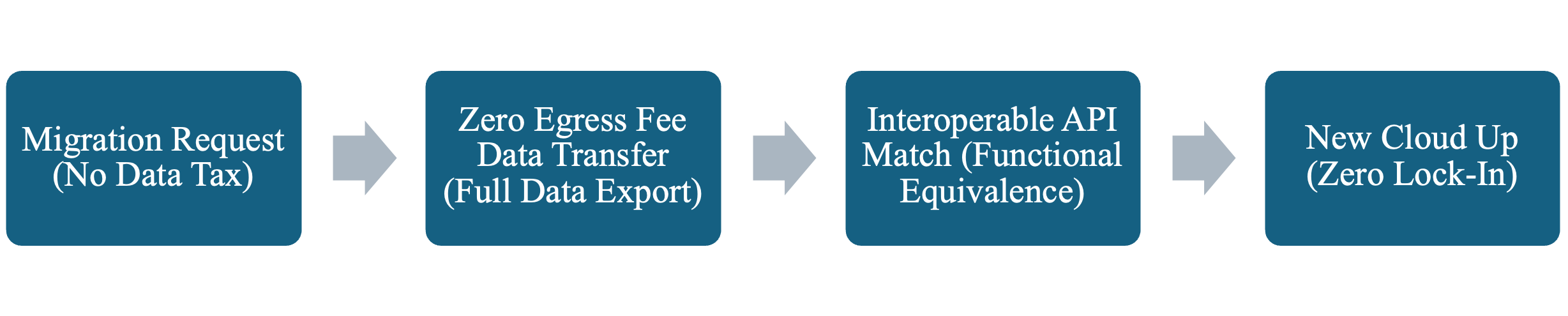
Additionally, cloud platforms must provide explicit technical registries detailing system capabilities and data formats to ensure seamless interoperability. If a client migrates an enterprise application, the original hosting vendor must actively support the transition. They must ensure the software maintains a consistent level of functionality on the destination infrastructure.
To maintain compliance, enterprise IT architects and corporate legal operations must audit their active multi-cloud environments. They must verify that cloud infrastructure agreements grant complete data portability and do not include hidden migration fees.
Infrastructure Migration Lifecycles
Phase 1: Cost Elimination: Complete removal of egress fees for outbound data transfers during migration windows.
Phase 2: Transparency Registry: Provision of detailed digital asset registers mapping all exportable metadata and data structures.
Phase 3: Interoperable Match: Execution of standard open-source API protocols to maintain functional application equivalence across platforms.
Comprehensive Compliance Checklist
Eliminate Data Exit Fees: Verify that all active cloud infrastructure contracts contain no financial penalties or data egress fees for vendor migration.
Maintain Portability Registers: Build and update comprehensive data registries detailing every digital asset category subject to export mandates.
Enforce Open Interoperability Standards: Require software engineering teams to develop cloud architectures using standard open-source formats rather than proprietary vendor code.
Audit Cloud Vendor Exit Terms: Conduct contractual reviews of active hyperscaler terms to guarantee clear alignment with statutory switching timelines.
Chapter 3: Software Development, Integration & Enterprise Licensing
3.1 The Open-Source Software Supply Chain Mandate: Managing Product Liability and Attestation Standards
Enterprise software development and procurement workflows faced a fundamental regulatory realignment following the enforcement of modernized product safety frameworks, such as the EU Cyber Resilience Act (CRA). Software vendors and development firms are now legally liable for unpatched vulnerabilities within their commercial products. This liability extends directly to third-party open-source components integrated into commercial software stacks, ending the era of "as-is" software licensing liability disclaimers.
The compliance threshold shifts from passive patch management to proactive, documented product security lifetimes. Software publishers must deliver an exact, machine-readable Software Bill of Materials (SBOM) with every product release.
Furthermore, developers must establish structured vulnerability disclosure channels. They must also commit to delivering automated security patches throughout the statutory lifecycle of the digital product.
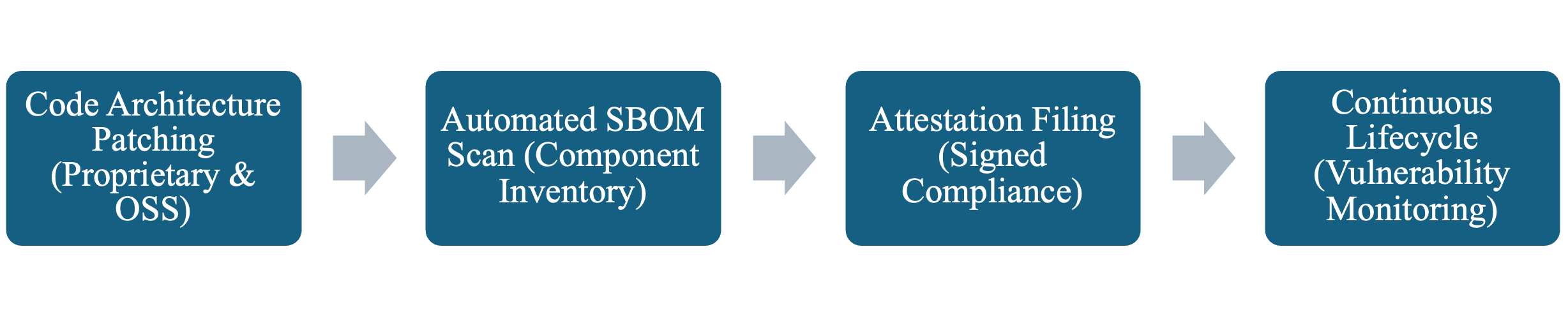
For engineering leads and software executives, this framework demands an immediate overhaul of the continuous integration and continuous deployment (CI/CD) pipeline. Organizations can no longer permit developers to pull unvetted open-source libraries from public repositories without automated compliance checks.
Failing to document software origins or leaving known, exploitable vulnerabilities unpatched in distributed software carries heavy administrative fines. These penalties can reach up to €15 million or 2.5% of global annual turnover, alongside mandatory market recall orders for non-compliant software.
Software Asset Classification
Critical Class II Software: Operating systems, hypervisors, and identity management tools subject to mandatory third-party conformity audits.
Standard Commercial Software: General enterprise applications requiring formal self-assessment certificates and machine-readable SBOM files.
Unmodified Open-Source Components: Freely distributed underlying libraries exempt from direct developer liability until integrated into a commercial product stack.
Comprehensive Compliance Checklist
Generate Machine-Readable SBOMs: Implement automated tooling within build pipelines to output CycloneDX or SPDX Software Bills of Materials for every software release.
Deploy Automated Dependency Scanning: Integrate continuous scanning tools to intercept, flag, and block open-source software packages with active vulnerabilities.
Sign Cryptographic Attestations: Establish software supply chain security platforms to cryptographically sign code builds, confirming compliance before market distribution.
Formalize Vulnerability Disclosure: Launch dedicated, public-facing vulnerability disclosure programs to intake, triage, and remediate external security reports within statutory timelines.
3.2 Automated Code Generation Governance: Balancing AI Intellectual Property and Indemnification Risks
The widespread integration of generative AI coding assistants into commercial development workflows has created complex legal exposures across intellectual property, licensing, and contract management. Software firms face significant litigation and compliance risks regarding copyright infringement and "clean-room" coding standards. This occurs when AI models inadvertently reproduce copyrighted snippets or proprietary code blocks without attribution or valid open-source licenses.
The primary regulatory risk centers on copyright transparency obligations and licensing contamination. If an AI coding tool introduces Copyleft code—such as GPL-licensed fragments—into a proprietary enterprise software application, the organization may face legal pressure to open-source its entire proprietary codebase.

Consequently, software development firms must transition away from unregulated AI generation models. They must adopt platforms that offer robust intellectual property indemnification clauses and explicit code-provenance filtering guarantees.
For corporate counsel and chief technology officers, this issue requires setting up rigorous software clean-room protocols and explicit employee guidelines. Enterprise development policies must explicitly define which AI models are permitted for software production.
They must also mandate the use of automated licensing scanners to catch copied code patterns before compilation. Failing to implement these technical guardrails invalidates software IP protections, creating costly contractual breaches with downstream enterprise software licensees.
AI-Generated Code Compliance Protocol
INGESTION GATE Restrict developer inputs to enterprise-approved AI tools that offer IP indemnification.
PROVENANCE FILTER Activate real-time code matching to detect and block proprietary or public code matches.
LICENSE SCANNING Run static analysis to identify hidden Copyleft or open-source licensing fragments.
IP ATTESTATION Document clean-room creation logs to preserve corporate software patent rights.
Comprehensive Compliance Checklist
Audit AI Vendor Contracts: Review agreements with AI coding assistant providers to ensure the presence of full intellectual property indemnification clauses.
Enforce Public Code Filters: Enable strict, real-time code matching settings within AI development tools to prevent the output of copyrighted code snippets.
Update Employee Use Policies: Publish clear, binding corporate policies governing where, how, and when generative AI tools may contribute to commercial codebases.
Execute Pre-Release Code Scans: Subject all AI-assisted software releases to rigorous code attribution scans to confirm the total absence of licensing conflicts.
3.3 Enterprise SaaS Licensing Overhauls: Managing Multi-Tenant Compliance and API Usage Audits
Modern enterprise software distribution has shifted almost entirely to cloud-hosted, multi-tenant Software-as-a-Service (SaaS) architectures and API-driven application delivery. This structural transformation has rendered traditional, device-bound End User License Agreements (EULAs) completely obsolete.
Instead, it introduces complex legal friction points around dynamic usage throttling, data privacy perimeters, and unexpected indirect-access licensing audits. Software firms must completely re-engineer their master subscription agreements to prevent revenue leakage while remaining aligned with international anti-lock-in mandates.
The core compliance threshold centers on transparent API consumption metrics and multi-tenant data isolation. Software providers must clearly define the boundaries of "authorized use" concerning automated bots, robotic process automation (RPA) tools, and third-party integrations that access the platform's API endpoints.
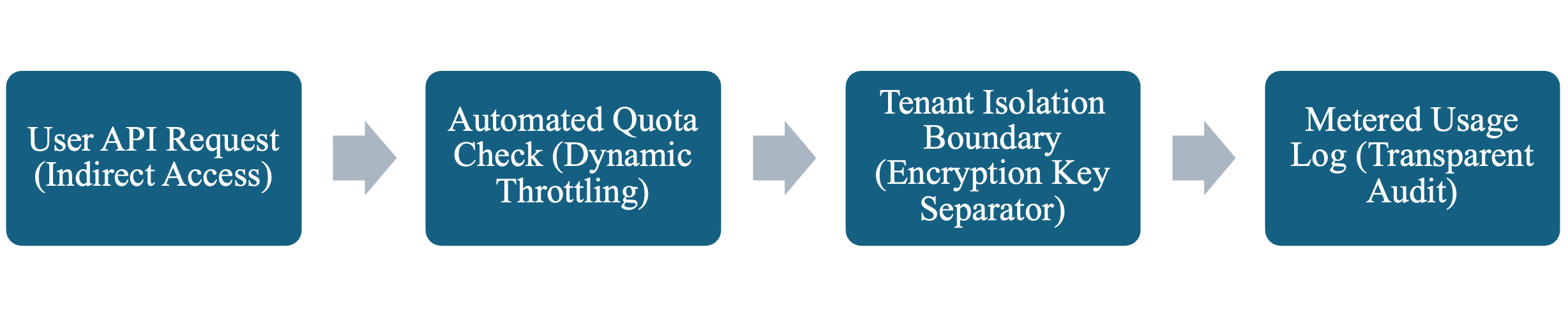
Furthermore, multi-tenant architectures must maintain verifiable, absolute logical data separation. This ensures that one enterprise tenant can never accidentally view, process, or corrupt another client's proprietary data during routine system upgrades or server migrations.
To avoid costly commercial disputes and regulatory scrutiny, software licensing managers must implement transparent, metered usage tracking dashboards. These systems must provide corporate clients with clear visibility into their software consumption patterns, user seats, and API calls.
Contractual terms must explicitly state the financial consequences of over-quota usage. This eliminates the need for aggressive, retroactive compliance audits that often damage client relationships and violate fair-trading standards.
SaaS Architecture Tiers
Multi-Tenant Computing: Shared cloud infrastructure requiring strict cryptographic logical separation between distinct client data stores.
API Integration Layer: Metered access paths connecting client systems, governed by explicit rate-limiting and indirect-use terms.
Dynamic Scale Metrics: Consumption-based subscription models that adjust billing based on real-time computational data volumes or active user counts.
Comprehensive Compliance Checklist
Redefine Indirect Access: Explicitly clarify in all enterprise SaaS contracts whether automated RPA tools and third-party APIs require paid user licenses.
Verify Tenant Data Separation: Conduct regular, documented penetration and isolation testing to confirm that multi-tenant data perimeters prevent cross-client leaks.
Deploy Consumption Dashboards: Provide subscription clients with real-time, self-service tracking tools to monitor active user seats and API utilization metrics.
Standardize Grace Windows: Embed automated notification alerts and contractual grace periods into SaaS agreements to let clients remedy usage overages before service suspension.
Chapter 4: Strategic Sourcing & Commercial Transactions
4.1 Global Supply Chain Due Diligence Mandates: Integrating Upstream Corporate Accountability and Traceability Standards
International strategic sourcing operations faced an abrupt shift following the full enforcement of comprehensive supply chain transparency frameworks, such as the EU Corporate Sustainability Due Diligence Directive (CSDDD). Procurement functions must now move beyond simple, unverified vendor questionnaires. They are legally required to identify, prevent, and mitigate adverse human rights and environmental impacts across their entire upstream value chain, completely ending the practice of insulating a business via third-party outsourcing layers.
The compliance threshold demands complete, verifiable traceability from raw material extraction to final delivery. Sourcing firms must establish formalized, continuous risk-mapping protocols across all tiers of their supplier network.
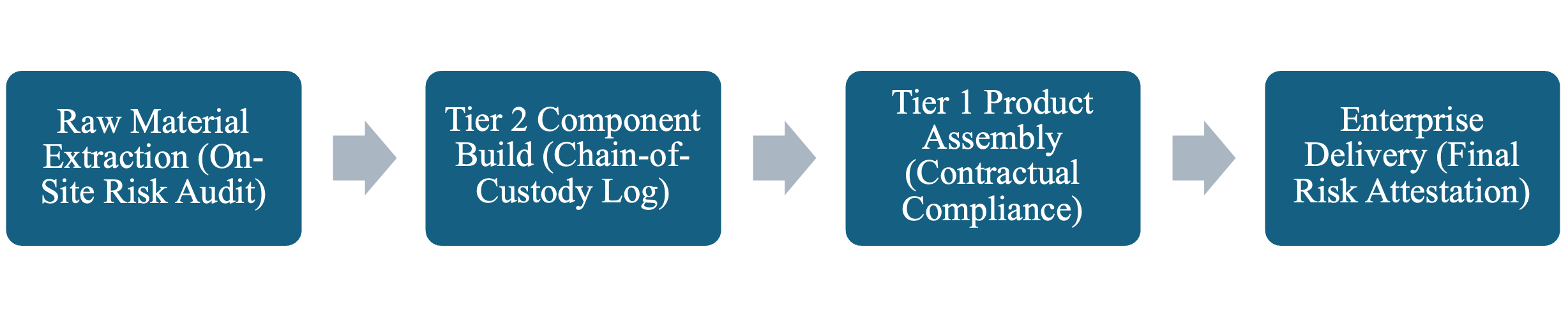
Furthermore, enterprises must embed independent grievance mechanisms and real-time incident reporting tools directly into their international supplier operations. If a sourcing network relies on an unverified vendor that violates local environmental or labor standards, the purchasing enterprise faces immediate legal exposure.
Penalties for non-compliance under these modernized regimes are severe, including administrative fines of up to 5% of global net turnover, civil liability lawsuits for corporate negligence, and immediate exclusion from lucrative public procurement contracts.
Supply Chain Risk Classifications
High-Risk Origin Vectors: Geographic regions or product components characterized by systemic labor vulnerabilities or severe environmental degradation risks.
Tier 1 Direct Suppliers: Primary contractors subject to mandatory, legally binding corporate codes of conduct and continuous operational reporting.
Sub-Tier Network Entities: Indirect component and material suppliers requiring automated chain-of-custody tracking and periodic third-party audits.
Comprehensive Compliance Checklist
Map Multi-Tier Supplier Networks: Implement advanced supply chain mapping software to trace all components from raw material extraction to final delivery.
Execute Legally Binding Codes: Embed strict human rights and environmental compliance clauses directly into all master procurement agreements.
Establish Independent Grievance Portals: Launch open, multi-lingual reporting systems allowing upstream supply chain workers to safely report operational non-compliance.
Conduct Independent On-Site Audits: Schedule documented, third-party physical inspections of high-risk manufacturing and extraction facilities to verify compliance logs.
4.2 Geo-Economic Sourcing Redundancy: Managing Nearshoring Transitions and Contractual Exit Strategies
The continuous escalation of geopolitical trade friction, shifting tariff structures, and localized export bans has transformed corporate strategic sourcing from a purely cost-driven model to a risk-mitigation framework. Sourcing executives must systematically move away from high-concentration dependency profiles—such as relying on a single geographic region or a sole vendor platform. Organizations are re-engineering their procurement pathways to build near-shore redundancies and friend-shoring alternatives to protect corporate operational resilience.
The primary legal challenge in this transition involves unwinding legacy, long-term master supply agreements without triggering severe breach-of-contract penalties. Standard boilerplate clauses—such as force majeure or basic convenience termination options—are frequently legally insufficient to handle structural geo-economic shifts or sudden international trade sanctions.

Consequently, procurement teams must draft precise, scenario-based exit triggers that permit immediate contract termination or volume reallocation. This flexibility is vital when defined geopolitical risk indices cross specified volatility thresholds.
For corporate counsel and global supply chain managers, this shift requires a complete revision of master supply agreement structures. Contracts must explicitly include dynamic volume allocation clauses.
These legal frameworks allow an enterprise to immediately divert manufacturing allocations between primary and secondary nearshore suppliers based on shifting regional tariff rates or export controls. Failing to embed these dynamic legal exit pathways locks an organization into inflexible supply networks, creating immediate inventory shortages and regulatory penalties during unexpected geopolitical disruptions.
Nearshoring Sourcing Allocation Protocol
CONCENTRATION AUDIT Identify all critical components dependent on single-source international suppliers.
NEARSHORE PROFILE Establish pre-vetted secondary manufacturing operations within stable regional zones.
DYNAMIC ESCAPE GAP Draft specific tariff and sanction triggers allowing immediate contract volume shifts.
PARALLEL ONBOARDING Execute operational legal frameworks across twin suppliers to maintain manufacturing readiness.
Comprehensive Compliance Checklist
Review Contract Termination Clauses: Audit active supply contracts to ensure force majeure definitions explicitly cover sudden international trade sanctions and export bans.
Draft Dynamic Allocation Clauses: Embed clear contractual provisions allowing the organization to instantly shift manufacturing volumes to alternative suppliers.
Verify Nearshore Compliance Profiles: Confirm that all newly onboarded regional and friend-shoring manufacturers fully comply with domestic import rules.
Implement Geo-Political Tracking Logs: Connect automated legal monitoring dashboards to global trade databases to track shifting tariff structures in real time.
4.3 Outbound Investment Screening and Tech Transfer Controls: Navigating the New Architecture of Cross-Border Commercial Transactions
Corporate sourcing, technology licensing, and commercial joint ventures faced a dramatic legal shift as the United States fully activated its new outbound investment review mechanisms alongside modernized export control paradigms. Moving far beyond traditional inbound reviews (like CFIUS), these strict regulatory regimes force domestic corporations to scrutinize where they deploy capital, transfer intellectual property, or establish supplier operations abroad. Commercial transactions involving specific dual-use tech sectors are now subject to mandatory federal declarations, sweeping operational restrictions, or total market bans.
The core regulatory risk focuses on accidental technology transfers and the broad definition of "covered transactions". Sourcing deals that include joint development agreements, technical support clauses, or the licensing of specialized software stacks to entities in defined foreign jurisdictions are heavily policed.
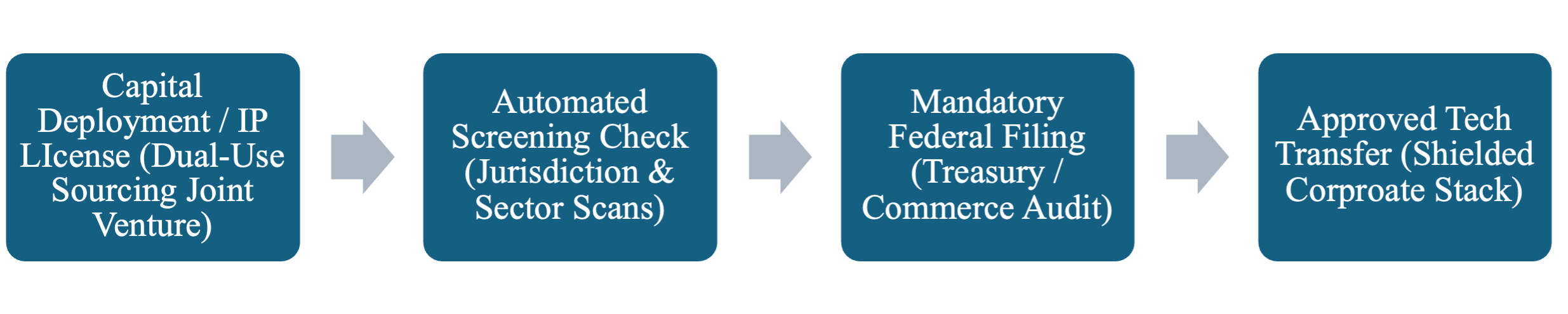
Furthermore, under strict guidelines emphasized by top-tier US law firms, commercial lawyers must audit the underlying technical specifications of everyday supply agreements. Standard software or hardware procurement deals can trigger strict national security penalties if they inadvertently provide access to advanced semiconductor design, artificial intelligence frameworks, or quantum communication tools.
For technology executives and procurement directors, this regulatory framework requires an immediate restructuring of international transactional diligence. Sourcing arrangements cannot be evaluated solely on pricing, capacity, and logistics.
Enterprises must build robust "deemed export" compliance firewalls and include absolute regulatory exit windows within their commercial agreements. Failing to map out these technical and geographic boundaries leaves a corporation exposed to severe civil and criminal penalties, immediate asset freezes, and the forced cancellation of vital overseas manufacturing agreements.
Outbound Transaction Risk Tiers
Prohibited Transactions: Direct investment, IP licensing, or joint sourcing ventures involving defined foreign entities in advanced AI, quantum computing, or next-generation microelectronics.
Mandatory Notification Transactions: Sourcing agreements and commercial partnerships utilizing lower-tier dual-use technologies that require formal federal reporting within tight statutory windows.
Exempt Sourcing Pathways: Standard, non-technical commodity procurement and off-the-shelf commercial software licenses operating outside designated national security categories.
Comprehensive Compliance Checklist
Audit Technical Sourcing Specs: Review the underlying technical criteria of all international procurement agreements against updated export control lists for dual-use technologies.
Embed Regulatory Conditions Precedent: Insert strict closing conditions in all cross-border transactional documents, requiring explicit federal clearance before any capital or IP is transferred.
Draft Unilateral Government Action Exit Clauses: Restructure joint venture and sourcing contracts to include zero-penalty termination mechanisms if a counterparty becomes subject to updated trade sanctions.
Isolate Shared Development Portals: Implement technical access controls on all shared vendor engineering portals to prevent foreign suppliers from accessing restricted domestic IP layers.
This publication, which we believe may be of interest to our clients and friends of Palantir Advisors, is for general information only. It should not be relied upon as legal advice as facts and circumstances may vary. The sharing of this information will not establish a client relationship with the recipient unless Palantir Advisors is or has been formally engaged to provide legal services.
© 2026 Palantir LLC. All rights reserved.