
technology, sourcing & data governance review
2024 annual report
Chapter 1: Advanced Data Governance & Foundations of AI Privacy
1.1: Transatlantic Data Flow Overhauls: Implementing Strict Transfer Impact Assessments (TIAs) Under the EU-US Data Privacy Framework
1.2: The Initial AI Risk-Tiering Wave: Establishing Corporate Algorithmic Inventories to Meet Early Risk Classification Standards
1.3: The SEC 4-Day Cyber Disclosure Rollout: Building Rapid Materiality Workflows Under New Form 8-K Timelines
Chapter 2: Digital Solutions, Transformation & Tech Ecosystems
2.1: Generative AI Ingestion Risks: Managing Massive Scraper Litigation and Fair Use Protections in Corporate Tech Deployments
2.2: Algorithmic Price-Fixing & Antitrust Exposure: Navigating "Hub-and-Spoke" Conspiracy Claims from Shared Vendor Code
2.3: State-Level Privacy Fragmentations: Navigating Hyper-Granular Compliance Requirements Across Expanding State Privacy Laws
Chapter 3: Software Development, Integration & Enterprise Licensing
3.1: Open-Source Code Contamination: Restructuring Tech Transaction Warranties to Prevent Copyleft Ingestion via AI Code Assistants
3.2: Legacy System Migrations & Tech Transformation: Restructuring Managed Services and Cloud Contracts for Cost Reduction and Security
3.3: API Data Monetization and Access Controls: Drafting Data Extraction Boundaries and Intellectual Property Portals
Chapter 4: Strategic Sourcing & Geopolitical Commercial Transactions
4.1: Upstream Value Chain Origin Audits: Implementing Traceability Frameworks for Sanction and Tariff Protection
4.2: Friend-Shoring and Nearshoring Redundancy: Drafting Index-Based Contractual Clauses for Regional Volume Shifts
4.3: International Joint Venture Controls: Navigating Evolving Trade Sanctions and Restricting Accidental Dual-Use Tech Transfers
Chapter 1: Advanced Data Governance & Foundations of AI Privacy
1.1 Transatlantic Data Flow Overhauls: Implementing Strict Transfer Impact Assessments (TIAs) Under the EU-US Data Privacy Framework
International corporate operations faced significant operational friction following the implementation of the EU-US Data Privacy Framework (DPF). While the DPF provided a streamlined legal pathway for transatlantic data flows, relying solely on self-certification is a major corporate compliance risk. Regulatory bodies and civil groups continue to mount intense judicial challenges against commercial data flows. This environment requires organizations to maintain strict cross-border validation protocols.
The core risk under this framework centers on the legal requirement to conduct documented Transfer Impact Assessments (TIAs). Multinational firms cannot assume that a vendor’s basic DPF certification fully shields them from regulatory scrutiny.
If a corporate data flow transfers sensitive data categories, the data exporter must prove that local laws in the destination country do not undermine the protections guaranteed by the data's native jurisdiction.
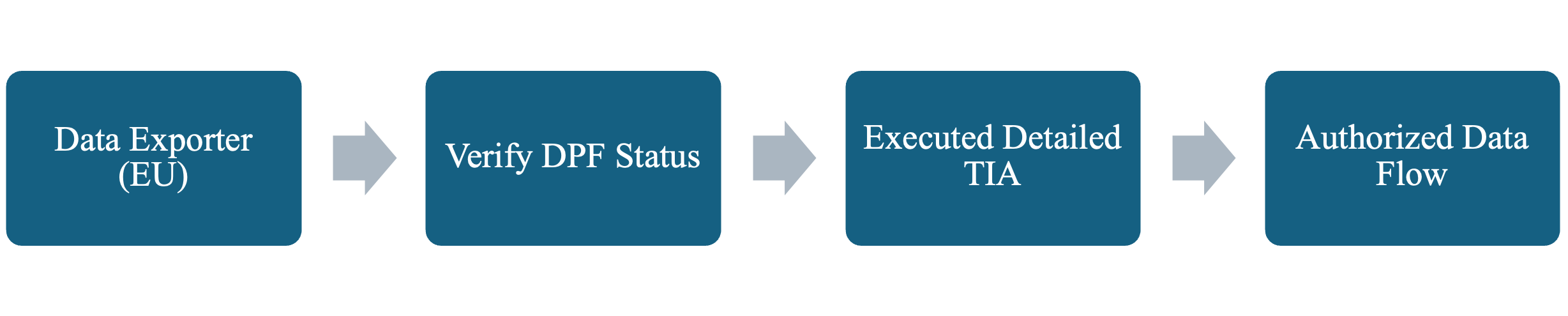
Furthermore, data protection authorities are actively auditing data pipelines within the healthcare, fintech, and enterprise cloud software sectors. Under strict international privacy rules, using an unverified data transfer pathway can result in steep administrative fines of up to 4% of global annual turnover or immediate data processing halts.
To mitigate this exposure, legal teams must update their master data processing addendums (DPAs). They must combine Standard Contractual Clauses (SCCs) with localized technical guardrails to ensure business continuity if the DPF faces a sudden judicial invalidation.
Cross-Border Transfer Protocol
MAP ENDPOINTS Identify all overseas cloud nodes and vendor targets.
VERIFY CERTIFICATION Confirm active DPF self-certification status quarterly.
DOCUMENT TIA Assess destination national security and surveillance laws.
APPLY ENCRYPTION Implement zero-trust cryptographic keys under corporate control.
Comprehensive Compliance Checklist
Audit Sub-Processor Pipelines: Map every cross-border data transfer pathway across all corporate subsidiaries and third-party SaaS vendors.
Execute Documented TIAs: Conduct formal, localized Transfer Impact Assessments for every destination country lacking a permanent statutory adequacy ruling.
Implement Supplementary Controls: Deploy technical safeguards, such as end-to-end encryption and pseudonymization, to shield data from foreign surveillance access.
Update Master DPAs: Ingest fallback modular Standard Contractual Clauses into all active vendor agreements to protect against sudden regulatory invalidations.
1.2 The Initial AI Risk-Tiering Wave: Establishing Corporate Algorithmic Inventories to Meet Early Risk Classification Standards
The rollout of early international artificial intelligence frameworks forced a shift from theoretical data ethics to strict internal software engineering governance. Organizations deploying automated decision-making models, predictive customer analytics, or generative text tools must establish precise, auditable risk-tiering registries. Companies must proactively classify their entire software stack to prevent unexpected regulatory compliance blocks.
The current regulatory enforcement strategy focuses on identifying and logging the specific risks associated with algorithmic automation. Software systems are categorized into distinct risk tiers based on their operational impact on human safety, privacy, and economic well-being.
Firms are required to document the exact data sources used to train their internal models, as well as the logic behind automated decisions.

Additionally, deploying unmapped or misclassified algorithmic models carries heavy financial penalties and reputational damage. If an automated customer engagement tool or an internal HR sorting engine uses unverified tracking data or displays discriminatory patterns, the enterprise faces immediate compliance penalties.
For technology executives, this requires establishing formal AI governance committees to review and clear all proprietary and licensed machine learning tools before they are integrated into commercial operations.
Algorithmic Risk Classifications
Prohibited Systems: Software utilizing manipulative behavior tracking or unauthorized biometric scrapers, requiring immediate market deletion.
High-Risk Models: Automated software managing credit scoring, hiring, or critical data access, requiring human-in-the-loop oversight.
General Applications: Standard consumer chatbots or optimization utilities requiring clear transparency disclosures for end-users.
Comprehensive Compliance Checklist
Build a Central AI Inventory: Establish an auditable corporate registry of all proprietary and licensed machine learning models used across business units.
Execute Risk-Tiering Reviews: Evaluate every automated software application against international frameworks to assign its correct compliance tier.
Document Model Lineage: Maintain clear, written logs detailing the data training inputs, capability boundaries, and logic of all active models.
Enforce Human Oversight: Integrate mandatory human-in-the-loop approval workflows for any software model flagged within high-risk categories.
1.3 The SEC 4-Day Cyber Incident Disclosure Rollout: Building Rapid Materiality Workflows Under New Form 8-K Timelines
The U.S. Securities and Exchange Commission (SEC) introduced a rigorous era of corporate transparency following the activation of its strict cyber incident disclosure rules. Publicly traded enterprises are now legally required to disclose material cybersecurity incidents via Item 1.05 of Form 8-K within four business days of determining that an incident is material. This tight statutory window requires close coordination between technical security teams, corporate counsel, and executive boards.
The primary compliance challenge focuses on the precise definition and timing of a "materiality determination". The SEC has made it clear that the four-day clock does not start when an incident is first detected, but rather when the company determines the breach is material.
However, organizations cannot intentionally delay making a materiality decision to avoid filing. An incident is material if there is a substantial likelihood that a reasonable investor would consider it important when making investment decisions.
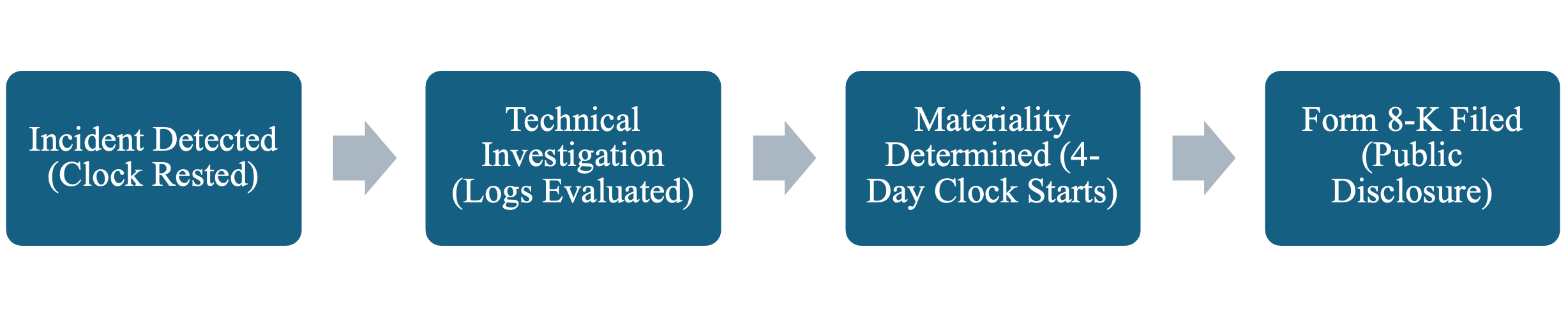
To meet these strict disclosure rules, companies must bridge the operational gap between their Security Operations Centers (SOC) and corporate legal operations. Technical incident logs must feed into a standardized, repeatable materiality evaluation framework.
Public filings must disclose the nature, scope, and timing of the incident, along with its practical impact on the firm’s financial condition and operational resilience. This must be handled carefully, without exposing technical code flaws that could invite further exploitation.
SEC Incident Response Milestones
Milestone 1: Detection: Security systems flag an active system breach or unauthorized data access event.
Milestone 2: Evaluation: Cross-functional legal and technical teams evaluate financial and operational impacts against materiality metrics.
Milestone 3: Determination: The organization formally determines the incident has a material impact, starting the strict 4-day filing window.
Milestone 4: Disclosure: Form 8-K is filed with the SEC, outlining the scope and operational context of the incident.
Comprehensive Compliance Checklist
Integrate Legal and IT Workflows: Connect technical security alerts directly to corporate legal operations to ensure rapid escalation of data breaches.
Establish Materiality Metrics: Define clear, quantitative and qualitative thresholds (e.g., operational downtime, customer data volume lost) to guide materiality reviews.
Train Incident Response Teams: Run simulation exercises with corporate counsel, executive boards, and IT leads to practice making defensible materiality choices under tight timelines.
Draft Secure Disclosure Templates: Prepare compliant Form 8-K templates that convey necessary regulatory details without revealing sensitive system vulnerabilities.
Chapter 2: Digital Solutions, Transformation & Tech Ecosystems
2.1 Generative AI Ingestion Risks: Managing Massive Scraper Litigation and Fair Use Protections in Corporate Tech Deployments
Enterprise digital solutions faced immediate legal and operational friction as the widespread use of automated data scrapers to train generative AI models triggered a massive wave of intellectual property litigation. Organizations deploying, licensing, or hosting software platforms that utilize large-scale web scraping must navigate intense challenges surrounding copyright infringement, breach of online terms of service, and commercial data misappropriation.
The core legal risk centers on the viability of the "fair use" defense in commercial technology workflows. If an enterprise software system ingests copyrighted online text, proprietary code, or visual media without explicit authorization, the corporation remains highly exposed to substantial statutory damages and mandatory injunctions that can force a total deletion of the underlying model.
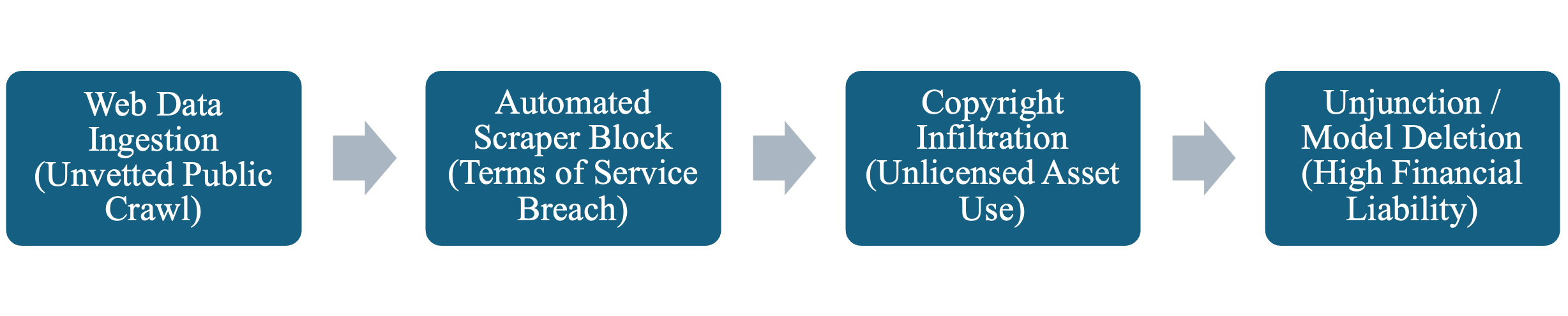
Furthermore, online platform operators are actively deploying aggressive technical and contractual barriers to protect their proprietary data assets from unauthorized ingestion. These measures include implementing strict anti-scraping scripts, blocking automated IP addresses, and embedding explicit data-mining prohibitions within their master terms of use.
To mitigate this exposure, technology executives must reform their software development frameworks, moving away from unvetted public data collection methods toward auditable, cleared datasets that utilize explicit opt-in agreements and verified commercial licensing structures.
Data Ingestion Compliance Tiers
Tier 1: Cleared Datasets: Inbound training inputs explicitly licensed from publishers or generated within clean-room environments under zero copyright exposure.
Tier 2: Public Domain Pools: Historical data completely free of modern copyright restrictions, requiring verified date-stamping and tracking.
Tier 3: High-Risk Ingestion: Automated public web crawls executed without explicit target consent, carrying severe litigation and breach-of-contract liabilities.
Comprehensive Compliance Checklist
Audit Training Input Data: Map and review the specific data sources and collection methodologies utilized to train all proprietary machine learning models.
Deploy Anti-Scraping Filters: Configure enterprise software build pipelines to detect and reject unlicensed copyrighted data elements before model compilation.
Review Platform Terms of Use: Verify that any automated data collection workflows fully comply with the target platform's digital terms of service and robots.txt protocols.
Incorporate Vendor Indemnification: Ensure that all third-party software procurement contracts include absolute intellectual property indemnification clauses covering AI training models.
2.2 Algorithmic Price-Fixing & Antitrust Exposure: Navigating "Hub-and-Spoke" Conspiracy Claims from Shared Vendor Code
The rapid integration of automated pricing engines and dynamic commercial optimization software has introduced significant antitrust and competition liabilities. Regulatory enforcement bodies are actively investigating industries where competing market participants utilize identical, third-party software platforms to set commercial terms. The primary exposure relies on "hub-and-spoke" conspiracy theories, where the shared algorithmic pricing tool acts as the central hub connecting otherwise independent market competitors.
The core compliance threshold dictates that an explicit agreement between competitors is no longer required to trigger an antitrust violation. If multiple firms delegate their pricing or procurement decisions to a common automated algorithm that utilizes shared, non-public market data to stabilize market prices, the arrangement can be prosecuted as an illegal form of automated collusion.

Consequently, corporate legal and procurement teams must implement strict internal data firewalls. Automated commercial platforms must be configured to rely exclusively on public market data inputs or internal historical metrics.
Failing to separate internal transactional logic from competitor data pools leaves an enterprise vulnerable to massive civil class-action lawsuits, heavy regulatory fines, and the forced cancellation of essential revenue-management systems.
Algorithmic Interaction Protocols
IDENTIFY HUBS Audit all commercial optimization software shared with market competitors.
ISOLATE DATA INBOUND Restrict software inputs to exclude non-public or real-time competitor metrics.
HARDCODE BOUNDARIES Embed independent minimum and maximum price variance caps into internal pricing tools.
LOG DECISION LOGIC Maintain explicit, automated records proving independent corporate pricing decisions.
Comprehensive Compliance Checklist
Map Commercial Pricing Code: Conduct detailed software audits on all automated pricing engines to confirm the absolute independence of data calculation scripts.
Enforce Competitor Data Blocks: Block internal optimization platforms from querying, absorbing, or processing non-public operational data from market competitors.
Insert Proprietary Variance Caps: Implement hard-coded business parameters within automated systems to guarantee that pricing variations respond strictly to internal capacity metrics.
Establish Regular Antitrust Reviews: Conduct periodic algorithmic compliance reviews to verify that internal software remains insulated from external hub-and-spoke dynamics.
2.3 State-Level Privacy Fragmentations: Navigating Hyper-Granular Compliance Requirements Across Expanding State Privacy Laws
Digital transformation initiatives faced extreme complexity as a highly fragmented patchwork of state-level data privacy statutes came into full effect across the United States. In the absence of a comprehensive federal privacy framework, individual states implemented unique data protection rules. These include hyper-granular definitions of consumer rights, distinct enforcement mechanisms, and unique compliance exemptions.
The primary compliance challenge focuses on the sudden expansion of consumer rights, including mandatory opt-out mechanisms for targeted advertising, strict limitations on profiling, and the right to correct data inaccuracies.
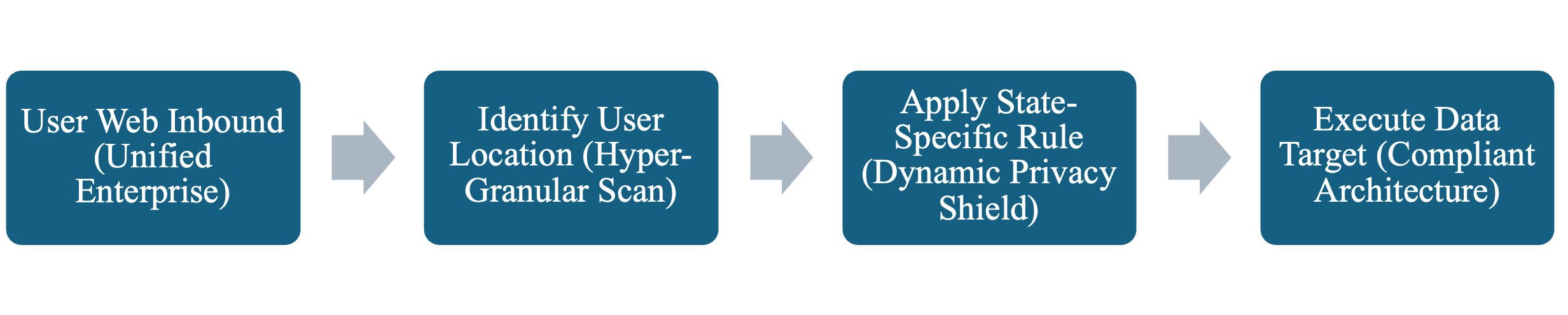
Furthermore, state regulatory enforcement agencies are actively targeting automated consumer tracking platforms, digital profiling tools, and cloud storage systems that handle children's data or biometric metrics. Failing to adapt corporate web systems to these shifting state borders can result in severe statutory penalties per individual violation.
To maintain operational continuity, technology and legal teams must move away from static, single-state privacy approaches. They must deploy dynamic, geo-targeted privacy management frameworks within their global customer-facing web and mobile architectures.
State Statutory Framework Levels
Strict Consumer Rights States: Regimes mandating comprehensive, frictionless opt-out buttons, mandatory data minimization, and extensive compliance records.
Standard Disclosure States: Frameworks emphasizing detailed privacy notices, consumer access rights, and clear security validation rules.
Targeted Sector Mandates: State-specific rules focusing strictly on high-risk categories like biometric identifiers, geolocation logs, or health status tracking.
Comprehensive Compliance Checklist
Deploy Dynamic Consumer Portals: Implement geo-location tracking systems on all corporate websites to present customized privacy choices based on the user's specific state.
Map Multi-State Data Scopes: Update central corporate data inventories to trace exactly how sensitive consumer data categories are processed, stored, and shared across state lines.
Standardize Universal Opt-Outs: Integrate recognized universal opt-out signals directly into all enterprise web architectures to process user privacy choices automatically.
Execute Periodic Privacy Impact Audits: Conduct formal, written Data Protection Impact Assessments (DPIAs) for all high-risk data processing activities to satisfy state regulatory filings.
Chapter 3: Software Development, Integration & Enterprise Licensing
3.1 Open-Source Code Contamination: Restructuring Tech Transaction Warranties to Prevent Copyleft Ingestion via AI Code Assistants
The widespread integration of generative AI coding assistants into commercial development workflows introduced severe contractual and intellectual property vulnerabilities. Software firms face significant compliance risks regarding copyright infringement and "clean-room" coding standards when AI tools inadvertently reproduce copyrighted snippets or proprietary code blocks without attribution.
The primary operational risk centers on licensing contamination. If an AI coding assistant introduces Copyleft code—such as GPL-licensed fragments—into a proprietary enterprise software application, the organization faces immediate legal pressure to open-source its entire proprietary codebase, destroying its underlying commercial asset value.

Consequently, corporate legal teams must systematically restructure technology transaction warranties and intellectual property covenants in software development agreements. Traditional boilerplate provisions are insufficient to handle the nuances of AI-generated code provenance.
Firms must mandate the use of automated licensing scanners to catch copied code patterns before compilation. Failing to implement these technical guardrails invalidates software IP protections, creating costly contractual breaches with downstream enterprise software licensees.
Software Asset Licensing Categories
Copyleft Contaminated Code: Software incorporating strong viral licenses that compel the organization to release proprietary code under public licensing terms.
Permissive Open-Source Code: Code utilizing standard libraries that permit commercial integration, requiring strict attribution and inventory logging.
Indemnified Proprietary Code: Software developed using enterprise-grade AI tools that offer absolute, verified intellectual property indemnification shields.
Comprehensive Compliance Checklist
Audit AI Vendor Indemnities: Review and renegotiate contracts with AI coding assistant providers to ensure the presence of full intellectual property indemnification clauses.
Deploy Automated Code Scanning: Integrate continuous static analysis tools within build pipelines to intercept, flag, and block open-source software packages with active licensing conflicts.
Update Intellectual Property Warranties: Revise master software development agreements to include explicit representations that no AI-generated Copyleft code exists within delivered software packages.
Maintain Clean-Room Documentation: Require engineering teams to maintain detailed development logs proving independent creation whenever AI tools are used for software production.
3.2 Legacy System Migrations & Tech Transformation: Restructuring Managed Services and Cloud Contracts for Cost Reduction and Security
Enterprise technology transformation initiatives faced severe friction as organizations accelerated migrations away from inflexible legacy systems to modern, cloud-native architectures. Squeezed by tightening operational budgets, IT leadership focused heavily on restructuring long-term managed services and cloud hosting agreements to reduce costs, optimize software asset utilization, and eliminate expensive shelfware.
However, these complex structural migrations create immediate operational exposure around data security, business continuity, and unexpected financial penalties during vendor transition windows.

The core legal challenge involves unbundling bundled software suites without triggering punitive termination fees or retroactive compliance audits from incumbent providers. Furthermore, during the high-risk migration phase, data environments are uniquely vulnerable to processing errors, architectural security gaps, and data leakage.
To maintain compliance and protect corporate data assets, commercial counsel must re-engineer master cloud agreements, ensuring that legacy service providers are contractually obligated to provide active, secure data-migration assistance while maintaining strict uptime performance guarantees.
Transformation Migration Lifecycles
ASSET OPTIMIZATION Conduct comprehensive software audits to identify and eliminate underutilized licenses and shelfware.
CONTRACT UNBUNDLING Negotiate the removal of restrictive product ties and fixed-fee structures from master vendor terms.
MIGRATION SHIELDING Implement strict data security protocols and continuous encryption during the physical transfer window.
PERFORMANCE BASELINING Establish dynamic, consumption-based service level agreements (SLAs) with the new hosting provider.
Comprehensive Compliance Checklist
Review Termination Provisions: Audit active managed services agreements to identify financial penalties, notification windows, and data extraction costs associated with legacy vendor termination.
Enforce Transition Cooperation: Insert explicit "disengagement assistance" covenants requiring legacy vendors to securely export data pools without operational delay.
Validate Cross-Environment Security: Execute rigorous, documented security assessments across transitional staging environments to prevent data leakage during migration.
Standardize Dynamic Scaling: Negotiate all newly onboarded cloud and SaaS contracts to ensure subscription fees scale directly with active, monthly usage metrics.
3.3 API Data Monetization and Access Controls: Drafting Data Extraction Boundaries and Intellectual Property Portals
The rapid evolution of the digital economy has transformed Application Programming Interfaces (APIs) from simple technical connectors into high-value commercial assets and data monetization portals. Enterprises leverage APIs to open new revenue streams, connect external developer ecosystems, and distribute proprietary data feeds to institutional clients.
However, this outward-facing access introduces profound legal risks regarding unauthorized data scraping, intellectual property theft, and systemic data perimeter breaches if access controls are poorly governed.
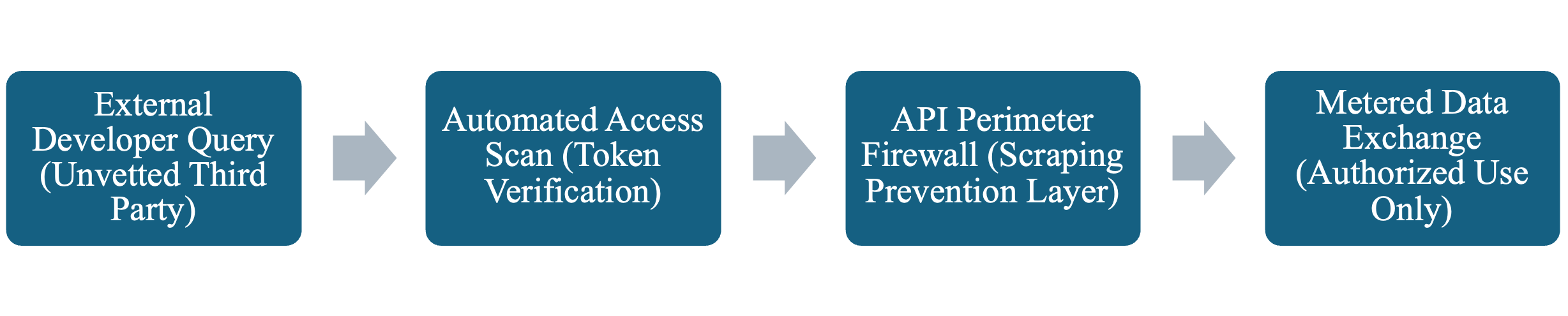
The core compliance threshold centers on drafting precise contractual boundaries of "authorized use" within API licensing frameworks. Software providers must explicitly define the limitations of data extraction, prohibiting external clients from utilizing corporate API endpoints to train competing AI models, harvest bulk consumer metrics, or bypass security features via automated bots.
To avoid systemic data leakages and unauthorized vendor commitments, organizations must implement strict algorithmic guardrails within their software architectures, combining rigid data access agreements with automated, real-time technical throttling controls.
API Integration Tiers
Monetized External Gateways: High-security portals distributing proprietary corporate data to verified, paying enterprise clients under strict usage terms.
Partner Integration Layers: Shared technical frameworks connecting strategic business partners, requiring reciprocal data security certifications.
Open Developer Environments: Sandboxed software environments designed for third-party application testing, strictly insulated from core database layers.
Comprehensive Compliance Checklist
Draft Explicit Scraping Prohibitions: Revise all public-facing API terms of use to legally ban the use of extracted data for machine learning model training.
Implement Dynamic Rate Throttling: Deploy automated technical limits within API delivery systems to instantly block and flag suspicious data harvesting behaviors.
Enforce Granular Access Keys: Utilize secure, token-based authorization frameworks to track and audit individual developer transactions in real time.
Audit Downstream Security Compliance: Conduct routine technical reviews of third-party systems utilizing your API portals to confirm strict adherence to corporate data privacy standards.
Chapter 4: Strategic Sourcing & Commercial Transactions
4.1 Upstream Value Chain Origin Audits: Implementing Traceability Frameworks for Sanction and Tariff Protection
Global commercial operations faced intense disruption as international trade authorities implemented strict import restrictions, forced labor enforcement regimes, and rapidly escalating tariff schedules. Procurement functions must now move beyond simple, unverified vendor declarations to protect their cross-border shipping lanes. Organizations are legally required to verify the exact, raw geographical origin of every component within their products, ending the practice of hiding sourcing origins behind middle-man blending facilities or third-party distribution hubs.
The core compliance threshold demands complete, verifiable traceability from raw material extraction to final custom borders. Sourcing firms must establish formalized, continuous chain-of-custody tracking across all tiers of their supplier network.

Furthermore, enterprises must embed independent oversight mechanisms and real-time shipment logging tools directly into their international supplier operations. If a sourcing network relies on an unverified sub-tier vendor that utilizes restricted materials or operates in sanctioned territories, the purchasing enterprise faces immediate legal exposure.
Penalties for non-compliance under modern trade regimes include immediate seizure of goods at the border, substantial financial penalties, and placement on restrictive government entity blacklists.
Sourcing Origin Risk Tiers
Sanctioned Territory Vectors: Regions subject to total import bans or strict economic embargoes, requiring an immediate block on all commercial data and material routing.
High-Tariff Component Streams: Sub-assemblies containing materials subjected to sudden, retaliatory trade duties, requiring active cost-rebalancing strategies.
Verified Clean Pathways: Sourcing channels backed by automated, cryptographically signed ledger tracking from origin to processing facility.
Comprehensive Compliance Checklist
Map Multi-Tier Supply Networks: Implement advanced supply chain tracing software to map and log all sub-tier components back to their raw material extraction origins.
Embed Absolute Origin Warranties: Revise master procurement contracts to include strict representations that suppliers will provide complete, unredacted component tracing documentation upon request.
Execute Periodic Border Audits: Run simulated customs documentation reviews across overseas manufacturing lines to verify compliance before official shipping filings.
Deploy Sanction Screening Software: Integrate real-time compliance screening tools into enterprise resource planning architectures to instantly check upstream vendors against active global sanctions registries.
4.2 Friend-Shoring and Nearshoring Redundancy: Drafting Index-Based Contractual Clauses for Regional Volume Shifts
The continuous escalation of geopolitical trade friction, shifting tariff structures, and localized export bans has transformed corporate strategic sourcing from a purely cost-driven model to a risk-mitigation framework. Sourcing executives must systematically move away from high-concentration dependency profiles—such as relying on a single geographic region or a sole vendor platform. Organizations are re-engineering their procurement pathways to build near-shore redundancies and friend-shoring alternatives to protect corporate operational resilience.
The primary legal challenge in this transition involves unwinding legacy, long-term master supply agreements without triggering severe breach-of-contract penalties. Standard boilerplate clauses—such as force majeure or basic convenience termination options—are frequently legally insufficient to handle structural geo-economic shifts or sudden international trade sanctions.

Consequently, procurement teams must draft precise, scenario-based exit triggers that permit immediate contract termination or volume reallocation. This flexibility is vital when defined geopolitical risk indices cross specified volatility thresholds.
For corporate counsel and global supply chain managers, this shift requires a complete revision of master supply agreement structures. Contracts must explicitly include dynamic volume allocation clauses.
These legal frameworks allow an enterprise to immediately divert manufacturing allocations between primary and secondary nearshore suppliers based on shifting regional tariff rates or export controls. Failing to embed these dynamic legal exit pathways locks an organization into inflexible supply networks, creating immediate inventory shortages and regulatory penalties during unexpected geopolitical disruptions.
Nearshoring Sourcing Allocation Protocol
CONCENTRATION AUDIT Identify all critical components dependent on single-source international suppliers.
NEARSHORE PROFILE Establish pre-vetted secondary manufacturing operations within stable regional zones.
DYNAMIC ESCAPE GAP Draft specific tariff and sanction triggers allowing immediate contract volume shifts.
PARALLEL ONBOARDING Execute operational legal frameworks across twin suppliers to maintain manufacturing readiness.
Comprehensive Compliance Checklist
Review Contract Termination Clauses: Audit active supply contracts to ensure force majeure definitions explicitly cover sudden international trade sanctions and export bans.
Draft Dynamic Allocation Clauses: Embed clear contractual provisions allowing the organization to instantly shift manufacturing volumes to alternative suppliers.
Verify Nearshore Compliance Profiles: Confirm that all newly onboarded regional and friend-shoring manufacturers fully comply with domestic import rules.
Implement Geo-Political Tracking Logs: Connect automated legal monitoring dashboards to global trade databases to track shifting tariff structures in real time.
4.3 International Joint Venture Controls: Navigating Evolving Trade Sanctions and Restricting Accidental Dual-Use Tech Transfers
Cross-border commercial alliances and joint corporate development initiatives face extreme legal friction from modern, rapid updates to export control structures and national security directives. Sourcing ventures that include mutual technical support, joint engineering design portals, or shared computational environments can inadvertently trigger severe regulatory breaches if restricted intellectual property transfers across international borders without a formal federal license.
The primary operational exposure centers on the broad interpretation of "deemed exports", where merely showing restricted technical blueprints or sharing system architecture configurations with foreign corporate personnel constitutes a regulated export event.
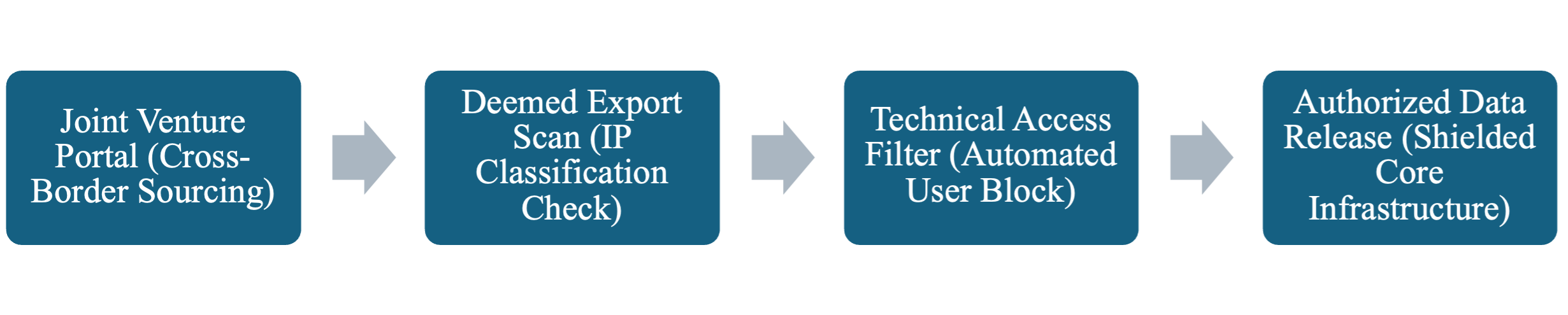
Consequently, enterprise compliance managers must move away from generic joint venture frameworks toward strict technical separation models. International commercial agreements must establish hard boundaries around what data, software codebases, and physical production assets are accessible to cross-border participants.
Failing to build these structural barriers can result in severe financial penalties, the immediate revocation of export privileges, and the forced dissolution of lucrative global corporate partnerships.
Joint Venture Operational Boundaries
Isolated Project Environments: Sandboxed technical networks completely separate from core corporate systems, restricting technical access to pre-cleared project teams.
Monitored Technology Streams: Shared technology distributions regulated by automated cryptographic access keys and real-time metadata logging.
Prohibited Tech Transfers: Advanced proprietary fields—such as encryption logic or automated system scripts—subject to an absolute sharing ban.
Comprehensive Compliance Checklist
Classify Joint Venture Intellectual Property: Review all technology, source code, and design specifications shared within international partnerships against updated dual-use export control lists.
Deploy Identity Access Governance: Implement role-based, geo-fenced technical authentication controls to block unauthorized foreign nationals from accessing restricted engineering repositories.
Draft Sanction Exit Mechanisms: Insert explicit, zero-penalty termination clauses into all joint venture agreements, allowing immediate withdrawal if a corporate partner is added to an economic restriction registry.
Execute Regular Compliance Training: Conduct mandatory training for all joint venture engineering and procurement personnel regarding deemed export restrictions and data sharing boundaries.
This publication, which we believe may be of interest to our clients and friends of Palantir Advisors, is for general information only. It should not be relied upon as legal advice as facts and circumstances may vary. The sharing of this information will not establish a client relationship with the recipient unless Palantir Advisors is or has been formally engaged to provide legal services.
© 2026 Palantir LLC. All rights reserved.