
technology, sourcing & data governance review
2023 annual report
Chapter 1: Advanced Data Governance & Foundations of AI Privacy
1.1: Transatlantic Data Flow Disruptions: Navigating Legacy Invalidations and Executing Rigorous Transfer Impact Assessments (TIAs)
1.2: The Sudden Generative AI Corporate Exposure: Managing Massive Employee Data Leaks and Public Model Ingestion
1.3: Navigating Emerging Cybersecurity Governance: Preparing for Compressed Incident Disclosure Frameworks
Chapter 2: Digital Solutions, Transformation & Tech Ecosystems
2.1: The Rise of Private-Tenant Cloud Architecture: Moving Away from Shared Public Models to Protect Intellectual Property
2.2: The Growth of Automated Corporate Analytics: Managing Bias and Discrimination Risks in Early Automated Software
2.3: Managing Shadow IT in Remote Environments: Overhauling Enterprise Network Security Policies for Distributed Workforces
Chapter 3: Software Development, Integration & Enterprise Licensing
3.1: The Emergence of AI Coding Assistants: Restructuring Software Asset Procurement to Prevent Copyleft Ingestion
3.2: Post-Pandemic Software Audit Waves: Countering Aggressive Vendor Compliance Audits and Managing Shelfware Liabilities
3.3: The Shift to Consumption-Based SaaS: Renegotiating Rigid Fixed-Fee Enterprise Software Agreements
Chapter 4: Strategic Sourcing & Commercial Transactions
4.1: Navigating Early Supply Chain Reshoring: Overhauling Sourcing Due Diligence Amid Shifting Trade Policies
4.2: The Single-Source Dependency Crisis: Restructuring Master Purchase Agreements to Build Sourcing Redundancy
4.3: Technical Joint Venture Defenses: Protecting Core Intellectual Property and Controlling Technology Transfers
Chapter 1: Advanced Data Governance & Foundations of AI Privacy
1.1 Transatlantic Data Flow Disruptions: Navigating Legacy Invalidations and Executing Rigorous Transfer Impact Assessments (TIAs)
International corporate operations faced severe administrative and operational hurdles following the total phase-out of legacy transatlantic data protocols. With traditional data-sharing mechanisms dismantled by judicial challenges, multinational enterprises could no longer legally move personnel, financial, or consumer data assets across borders under old frameworks. This operational shift forced organizations to urgently update their global data-routing architectures to prevent immediate data processing halts and massive regulatory penalties.
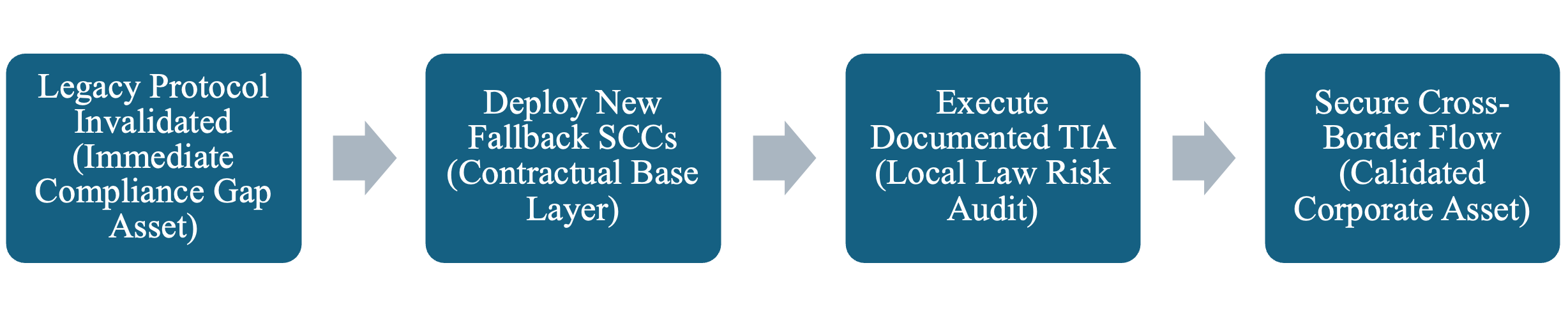
The primary compliance challenge focused on the mandatory implementation of Standard Contractual Clauses (SCCs) paired with documented Transfer Impact Assessments (TIAs). Corporate legal departments could no longer treat cross-border transfer agreements as basic administrative checkboxes.
Data exporters were legally required to perform deep, country-specific risk evaluations. They had to explicitly prove that local destination laws and surveillance practices would not compromise the privacy rights of the data's origin country.
Furthermore, data protection authorities began actively targeting high-volume sectors, focusing on cloud storage vendors, multinational financial institutions, and global consumer platforms. Relying on unauthorized data pipelines carried steep statutory risks, including administrative fines of up to 4% of global annual turnover.
To insulate corporate operations, compliance teams had to systematically re-map their data environments. They had to implement strict supplementary technical controls, such as regional encryption keys and data tokenization, to protect data flows from foreign surveillance access.
Cross-Border Transfer Protocol
MAP DATA HOUSES Identify every international database node and vendor hosting location.
EXECUTE NEW SCCs Formally implement updated contractual clauses across all corporate entities.
DOCUMENT THE TIA Draft formal, auditable assessments of destination surveillance laws.
APPLY ENCRYPTION Deploy zero-trust encryption where keys remain held exclusively by the data exporter.
Comprehensive Compliance Checklist
Map International Vendor Pipelines: Document every cross-border data transfer pathway across all internal business units and third-party SaaS applications.
Execute Standard Contractual Clauses: Replace all outdated, invalidated data-sharing protocols with the mandatory standard contractual clauses in all master agreements.
File Formal Transfer Impact Assessments: Conduct and archive formal, written TIAs for every destination country lacking a permanent statutory adequacy ruling.
Deploy Technical Supplementary Controls: Implement technical safeguards, including end-to-end encryption and pseudonymization, to shield transferred data from external interception.
1.2 The Sudden Generative AI Corporate Exposure: Managing Massive Employee Data Leaks and Public Model Ingestion
The explosive, uncoordinated adoption of consumer-grade generative AI platforms by corporate workforces created immediate, severe vulnerabilities regarding data privacy and intellectual property protection. Employees frequently pasted proprietary code, sensitive financial spreadsheets, and confidential customer metrics into public AI prompts to automate daily tasks.
Because early consumer platforms utilized all inbound user prompts to train their public machine learning models, corporations faced the real risk of having their trade secrets and sensitive data inadvertently exposed to external users and market competitors.

The core regulatory risk centered on violations of statutory data minimization principles and corporate non-disclosure agreements (NDAs). Inputting customer data into an external cloud tool without explicit consent or verified data-deletion guarantees directly breached international privacy rules and corporate client contracts.
Consequently, technology executives and corporate counsel had to shift from passive observation to active enforcement. They rushed to implement strict internal data-handling policies and launch comprehensive corporate governance committees to audit all workplace software inputs.
Algorithmic Data Risk Tiers
High-Exposure Public Tools: Open-access consumer chatbots that log user prompts for public model training, carrying an absolute corporate use ban.
Approved Enterprise Solutions: Dedicated corporate accounts operating under customized contracts that explicitly block data harvesting and vendor model training.
Insulated Internal Sandboxes: Proprietary, locally hosted model environments developed in-house with zero external data communication pathways.
Comprehensive Compliance Checklist
Publish Binding AI Use Policies: Issue an immediate corporate policy defining exactly which AI platforms are authorized for business use and banning public prompt inputs.
Implement Network-Level Blocks: Configure corporate firewalls and enterprise endpoint managers to block unauthorized consumer AI portals across all corporate devices.
Execute Vendor Data Audits: Require all active software vendors to provide written clarity regarding whether their integrated tools utilize corporate inputs for machine learning.
Conduct Employee Risk Training: Launch mandatory compliance training sessions to educate teams on the hidden intellectual property and confidentiality risks of unvetted text tools.
1.3 Navigating Emerging Cybersecurity Governance: Preparing for Compressed Incident Disclosure Frameworks
Corporate compliance operations faced significant pressure as international regulatory agencies began drafting and proposing strict, standardized rules for corporate cybersecurity transparency. Boards could no longer treat cybersecurity breaches as isolated IT events that could be quietly remediated over several months.
Early drafts of modernized regulatory frameworks made it clear that public corporations would soon face tight, mandatory windows to evaluate, confirm, and publicly disclose material cybersecurity incidents.
The primary operational challenge involved building highly coordinated workflows connecting technical security operations centers directly with corporate legal teams. Organizations had to move away from subjective, unstructured definitions of incident impact.
They had to establish repeatable, quantitative metrics to determine exactly when a network breach crossed the threshold into a "material event." Failing to prepare internal tracking pipelines left corporations highly vulnerable to subsequent regulatory enforcement actions, shareholder lawsuits, and intense market volatility when breaches eventually became public.
Cybersecurity Response Milestones
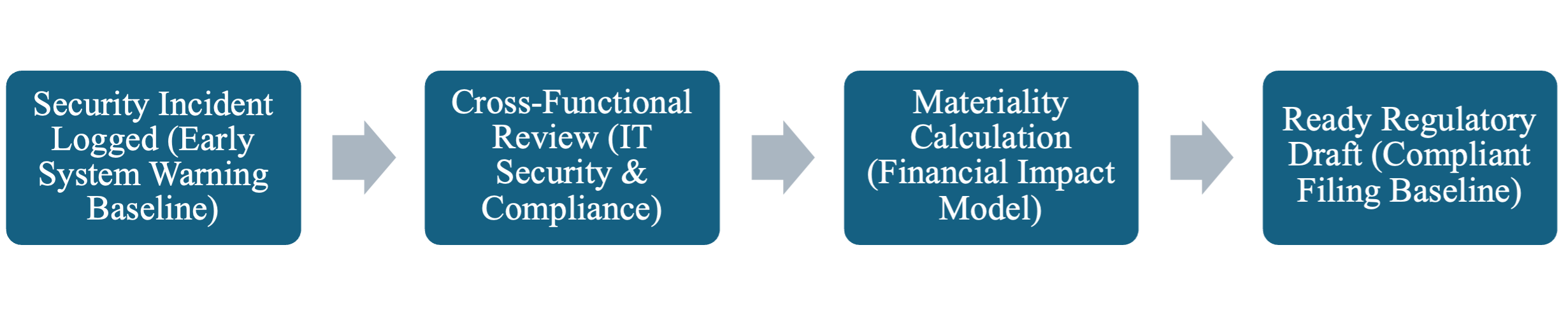
Milestone 1: Log and Contain: Technical infrastructure monitors detect a system breach and instantly isolate compromised server nodes.
Milestone 2: Cross-Functional Assessment: Security analysts escalate system logs to corporate legal teams to evaluate financial and operational downtime metrics.
Milestone 3: Materiality Benchmarking: The incident response team calculates the breach's long-term impact against pre-set regulatory disclosure metrics.
Milestone 4: Compliance Alignment: Corporate counsel prepares standard disclosure filings, ensuring the technical root cause is documented without revealing active flaws.
Comprehensive Compliance Checklist
Bridge Security and Legal Workflows: Establish automated alert pathways to instantly escalate significant security breaches from the IT desk to corporate counsel.
Define Materiality Thresholds: Develop structured, written guidelines using explicit financial and operational metrics to standardize the materiality evaluation process.
Update Incident Playbooks: Rewrite corporate emergency response plans to incorporate strict, time-sensitive compliance drafting steps alongside technical remediation actions.
Conduct Board-Level Simulations: Run comprehensive cyber breach simulations with executive directors to practice making rapid, defensible disclosure decisions under pressure.
Chapter 2: Digital Solutions, Transformation & Tech Ecosystems
2.1 The Rise of Private-Tenant Cloud Architecture: Moving Away from Shared Public Models to Protect Intellectual Property
Enterprise digital transformation strategies underwent a structural pivot as organizations recognized the data protection flaws of standard public multi-tenant cloud systems. With generative AI tools and automated optimization engines looking to ingest massive enterprise data pools for model refinement, companies faced significant risks regarding data contamination and trade secret leakage.
Consequently, digital strategy executives began moving away from standard public cloud platforms toward specialized, private-tenant cloud architectures to ensure their data remained insulated.

The core legal challenge involved restructuring standard enterprise cloud procurement contracts. Traditional master service agreements granted cloud vendors broad rights to analyze hosted customer data to improve generic platform performance.
To protect corporate intellectual property, procurement teams had to draft precise, non-negotiable data-isolation covenants. These terms explicitly stripped cloud providers of data harvesting rights and mandated single-tenant software delivery models for high-value business units.
Cloud Architecture Security Levels
Isolated Private Clouds: Dedicated physical or cryptographically isolated cloud nodes where corporate data never interacts with external models or vendor tools.
Gated Commercial Portals: Enterprise software spaces operating under customized contracts that explicitly ban data harvesting and generic performance monitoring.
Standard Shared Spaces: Public multi-tenant cloud environments requiring strict software logging and continuous data encryption to minimize exposure risks.
Comprehensive Compliance Checklist
Audit Cloud Procurement Terms: Review all active cloud and SaaS agreements to identify and strip out clauses that permit vendors to harvest customer data for product optimization.
Enforce Single-Tenant Delivery: Require all core enterprise software providers to deliver applications via private, single-tenant instances for sensitive data operations.
Deploy Cryptographic Key Controls: Implement advanced database setups where the corporate client retains exclusive, localized possession of encryption keys.
Establish Cross-Tenant Firewalls: Validate that all data streams routed to external cloud systems are insulated behind strict, automated access boundaries.
2.2 The Growth of Automated Corporate Analytics: Managing Bias and Discrimination Risks in Early Automated Software
The widespread deployment of automated software tools to optimize high-volume business operations—such as human resource recruitment, credit risk scoring, and customer service delivery—introduced significant compliance risks. Corporate leadership rapidly adopted predictive algorithms to cut operational costs and accelerate processing timelines.
However, organizations quickly faced intense regulatory and litigation exposure when these early automated systems displayed systemic bias, inadvertent discrimination, or opaque decision-making logic that violated fair-trading and employment laws.
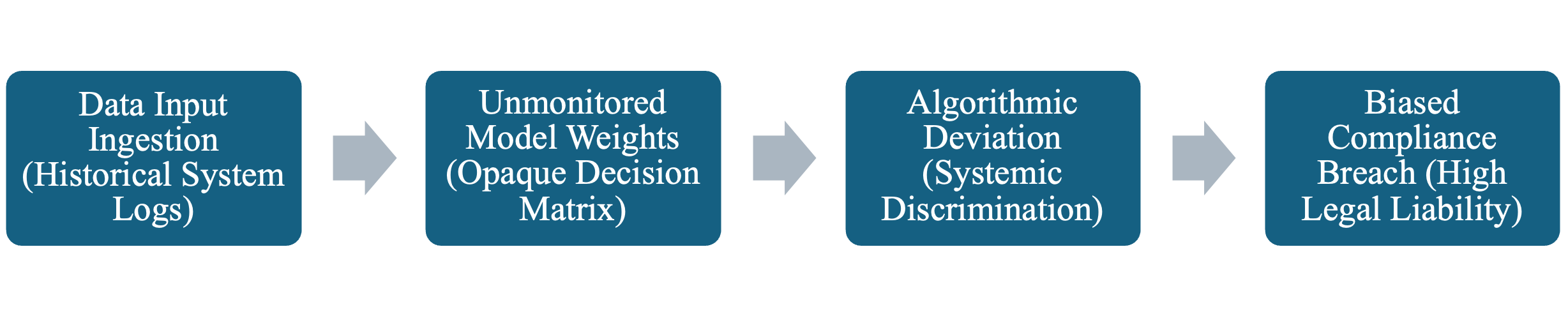
The core compliance threshold dictated that an enterprise remained fully liable for the legal outcomes of its software, regardless of whether a decision was generated by a human manager or an automated script. If an automated recruitment tool utilized historical system logs that inadvertently favored specific demographics, the company faced immediate discrimination claims and civil regulatory investigations.
To mitigate this exposure, technology executives had to implement rigorous algorithmic checking workflows. These frameworks required software developers to perform comprehensive bias audits and maintain detailed data logs proving independent creation.
Algorithmic Processing Tiers
INPUT AUDITING Scan and balance historical data inputs to eliminate embedded bias before model training.
LOGIC TRACKING Maintain clear, human-readable records detailing the mathematical weights used by decision software.
BIAS CHECKING Execute periodic, automated checks to identify and correct discriminatory patterns in software outputs.
HUMAN INTERVENTION Integrate mandatory human review gates to override automated choices in high-risk categories.
Comprehensive Compliance Checklist
Audit Automated System Logic: Conduct thorough compliance reviews on all internal software systems that manage automated customer or employee evaluations.
Validate Inbound Data Pools: Screen the historical training data sets utilized by corporate analytics software to identify and eliminate systemic bias factors.
Implement Human Override Gates: Embed mandatory human-in-the-loop validation steps within all automated decision software to block unreviewed negative outcomes.
Maintain Automated Decision Logs: Configure analytics software to generate immutable, time-stamped logs explaining the data factors behind every automated choice.
2.3 Managing Shadow IT in Remote Environments: Overhauling Enterprise Network Security Policies for Distributed Workforces
The normalization of remote and hybrid workplace structures created complex corporate compliance challenges regarding data perimeter security and software asset tracking. Employees frequently bypassed slow corporate procurement pathways to install unvetted web applications, browser extensions, and cloud communication platforms on their work devices to optimize their remote tasks.
This proliferation of "Shadow IT" created immediate legal risks, exposing corporate networks to unmonitored data transfers, hidden open-source code flaws, and severe data breaches that violated client privacy agreements.
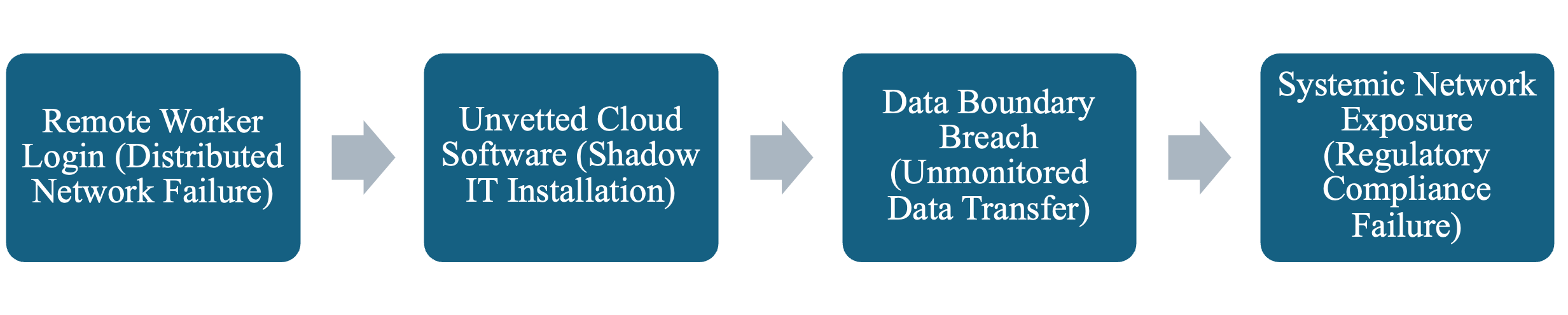
Furthermore, state-level data privacy enforcement agencies began targeting organizations that failed to maintain strict control over where their consumer data was stored or processed. Allowing employees to route corporate data through unvetted consumer applications directly breached data minimization rules.
To maintain compliance and protect corporate infrastructure, technology teams had to move away from legacy perimeter security strategies. They had to deploy strict zero-trust network architectures combined with clear, enforceable employee software utilization policies.
Shadow IT Software Classifications
Prohibited Consumer Apps: Public-access software and unvetted browser extensions that log data externally, subject to immediate endpoint installation blocks.
Unvetted Commercial Tools: Productivity utilities installed without central IT clearance, requiring immediate compliance review and security sandboxing.
Cleared Corporate Suites: Centrally managed, enterprise-grade software applications fully integrated with corporate data security controls.
Comprehensive Compliance Checklist
Deploy Endpoint Scanning Software: Install continuous endpoint monitoring systems on all corporate laptops to instantly detect and log unauthorized software installations.
Establish Central Software Catalogs: Provide remote workforces with a clear, pre-vetted repository of approved digital solutions to minimize the need for unvetted tools.
Update Remote Work Policies: Revise employment and data-handling agreements to explicitly prohibit the transmission of corporate data through unauthorized apps.
Execute Network Access Audits: Conduct routine automated reviews of cloud data pathways to ensure remote connections remain within secure corporate borders.
Chapter 3: Software Development, Integration & Enterprise Licensing
3.1 The Emergence of AI Coding Assistants: Restructuring Software Asset Procurement to Prevent Copyleft Ingestion
The rapid introduction of early AI-assisted code generation tools into commercial software development pipelines created unprecedented legal risks across intellectual property and contract management. Engineering teams quickly adopted these automated assistants to accelerate software build cycles.
However, corporate legal departments discovered that early generation tools frequently reproduced copyrighted code fragments and open-source snippets without proper attribution or valid licensing coverage.
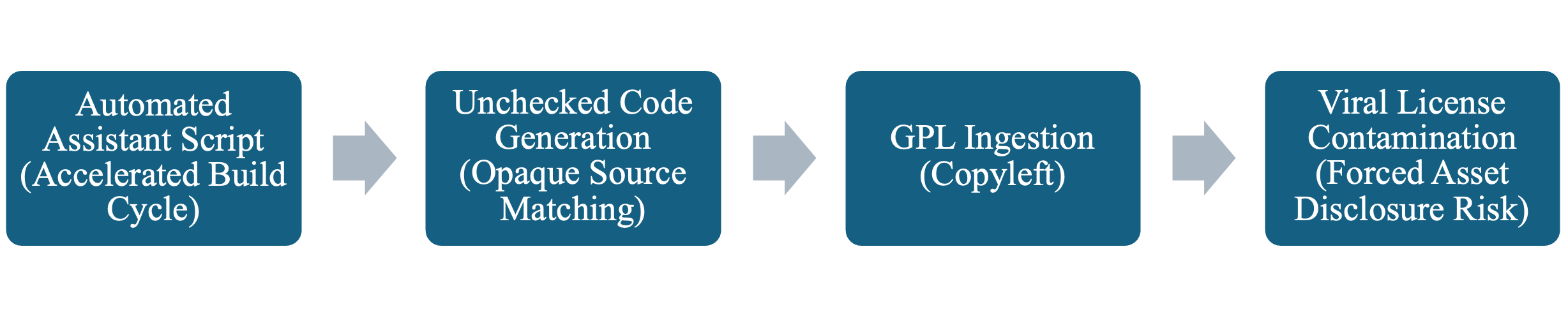
The primary operational risk centered on viral Copyleft contamination. If an AI coding tool inadvertently inserted a GPL-licensed code block into an enterprise's proprietary software product, the organization could be legally forced to open-source its entire proprietary codebase.
To protect corporate software patents and maintain commercial asset value, legal teams had to quickly restructure technology transaction warranties. They had to introduce strict code-provenance filtering rules and mandate the use of automated licensing scanners before any code could be compiled.
Code Provenance Classifications
Contaminated Open Source: Software code containing viral Copyleft fragments that trigger immediate obligations to publicly disclose the underlying system.
Attributed Open Source: Publicly sourced libraries operating under permissive terms, requiring documented licensing records and clear compliance files.
Verified Clean Code: Software code developed through audited pipelines utilizing enterprise-grade tools with verified intellectual property shields.
Comprehensive Compliance Checklist
Review AI Developer Covenants: Renegotiate contracts with AI development tool providers to secure comprehensive intellectual property indemnification protections.
Integrate Licensing Scanners: Embed real-time open-source software (OSS) detection tools directly into continuous integration and development pipelines.
Update Software Warranties: Revise all downstream master software delivery agreements to explicitly guarantee that no AI-generated Copyleft fragments exist in the product.
Implement Clean-Room Protocols: Maintain strict, time-stamped engineering logs proving independent creation whenever automated tools assist in software production.
3.2 Post-Pandemic Software Audit Waves: Countering Aggressive Vendor Compliance Audits and Managing Shelfware Liabilities
As global economic growth slowed, major enterprise software publishers launched aggressive compliance audit campaigns to uncover hidden licensing revenue. Software vendors targeted organizations that had rapidly scaled up user seats and cloud connections during remote work expansions but had failed to track their license usage.
These retroactive compliance audits targeted unexpected software access paths, unmonitored server connections, and underutilized bundled software suites ("shelfware"). This exposure resulted in multi-million-dollar compliance penalties and unexpected retro-billing fees.

The core legal challenge involved defending against aggressive interpretations of "indirect access" clauses within legacy End User License Agreements (EULAs). Vendors argued that when an enterprise linked a third-party automated tool to a core database via an API, every automated transaction required a full, paid user license.
To counter this exposure, corporate procurement managers had to establish centralized software asset management (SAM) teams. They had to systematically unbundle underutilized software bundles and renegotiate master subscription agreements to ensure clear usage metrics.
License Enforcement Phases
INTERNAL CONSUMPTION AUDIT Conduct rigorous, independent counts of all active software deployments to identify hidden overages.
INDIRECT ACCESS MAPPING Trace all automated API connections to core systems to identify potential licensing vulnerabilities.
SHELFWARE REBALANCING Negotiate the systematic removal of unused software seats from upcoming subscription renewals.
CONTRACT REWRITING Embed transparent, consumption-based subscription metrics into all newly executed enterprise software deals.
Comprehensive Compliance Checklist
Review Active EULA Audit Terms: Identify notification windows, audit methodologies, and dispute resolution frameworks within all major software contracts.
Map All API System Connections: Document every automated third-party connector linking to core databases to evaluate indirect access financial liabilities.
Consolidate Underutilized Licenses: Terminate or scale down underutilized software bundles and shelfware ahead of annual renewal notice deadlines.
Deploy Automated SAM Tools: Implement centralized Software Asset Management tools to track real-time software seat utilization across all corporate business units.
3.3 The Shift to Consumption-Based SaaS: Renegotiating Rigid Fixed-Fee Enterprise Software Agreements
Faced with rising infrastructure costs and tightening corporate budgets, enterprise software procurement moved toward consumption-based Software-as-a-Service (SaaS) subscription models. Organizations actively sought to replace rigid, long-term enterprise agreements that forced fixed, high-volume financial commitments regardless of actual system use.
This commercial transformation required software licensing managers to completely re-engineer their master subscription structures to prevent revenue leakage while remaining aligned with fair-trading principles.
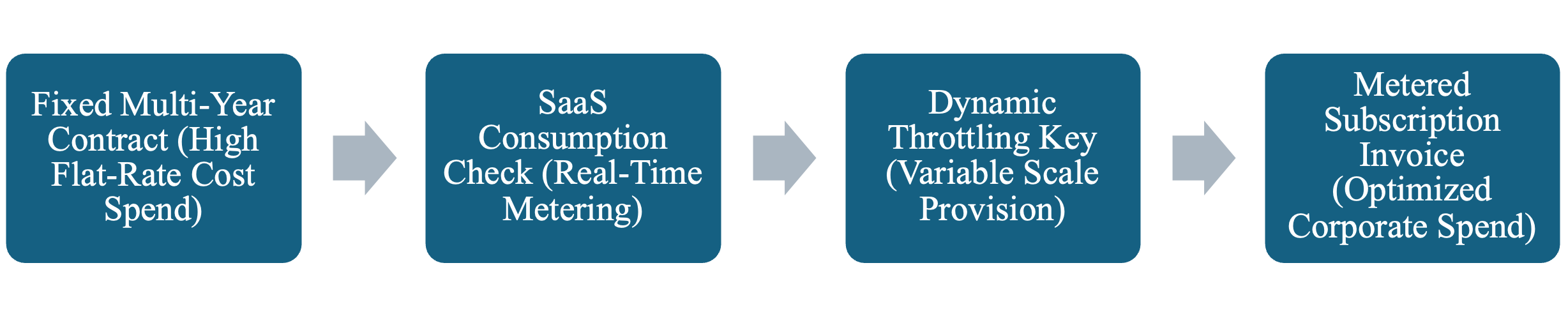
The core compliance threshold centered on establishing clear, transparent system consumption tracking metrics. Sourcing teams had to ensure that variable billing factors—such as data volumes processed, active monthly users, or specific API transactions—were clearly defined within master contract templates.
Furthermore, agreements had to include dynamic notification parameters and explicit overage grace periods. These legal guardrails prevented vendors from abruptly suspending vital corporate software systems when automated usage metrics crossed monthly limits.
SaaS Subscription Frameworks
Metered Computational Tiers: Advanced flexible scaling models where corporate billing dynamically adjusts based on real-time data storage or processing utilization.
Per-Seat Active Models: Variable subscription profiles where billing accounts strictly reflect the actual number of employees logging into the tool.
Rigid Flat-Rate Contracts: Legacy fixed-fee subscription matrices requiring intensive renegotiation to eliminate underutilized capacity penalties.
Comprehensive Compliance Checklist
Embed Usage Notification Alerts: Require software vendors to provide automated, real-time alerts when enterprise utilization approaches contract limits.
Negotiate Flexible Scaling Terms: Insert explicit contractual clauses that permit the organization to scale down active user seats or data limits without penalty.
Standardize Overage Grace Windows: Secure binding grace windows within all SaaS agreements to let the firm resolve temporary usage spikes before service suspension.
Deconstruct Software Bundle Packages: Force the unbundling of complex software suites, isolating and paying strictly for the specific tools required for core operations.
Chapter 4: Strategic Sourcing & Commercial Transactions
4.1 Navigating Early Supply Chain Reshoring: Overhauling Sourcing Due Diligence Amid Shifting Trade Policies
Global strategic sourcing and procurement operations faced significant legal and logistical challenges due to tightening international trade barriers, changing custom rules, and localized export controls. Multinational enterprises could no longer rely on unverified, single-source global manufacturing pipelines to maintain their raw material and component inputs. Sourcing models had to shift away from simple cost-optimization frameworks toward rigorous traceability structures to protect cross-border shipping lines from sudden border seizures and punitive customs penalties.
The core compliance threshold required the implementation of complete, verifiable chain-of-custody documentation across all tiers of the supplier network. Purchasing firms had to establish automated tracking systems to map every production milestone, from raw material extraction to final assembly.
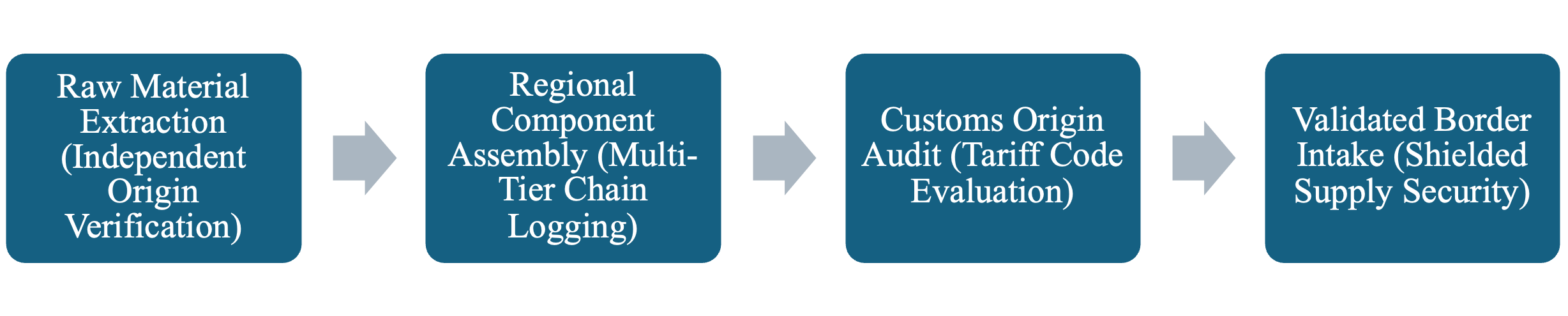
Furthermore, international trade enforcement agencies began targeting key technology, energy, and automotive manufacturing channels. Relying on an unverified upstream supplier that utilized restricted materials or operated in embargoed zones created immediate civil liability risks.
To insulate their networks, procurement teams had to rewrite their master purchasing agreements. They inserted absolute regulatory verification requirements and independent physical inspection rights directly into all international supplier contracts.
Global Sourcing Risk Tiers
Sanctioned Sourcing Channels: High-risk manufacturing locations subject to immediate economic embargoes, requiring an absolute block on all procurement activity.
Volatile Tariff Classifications: Component streams vulnerable to sudden, retaliatory customs duties, requiring active regional rebalancing reviews.
Verified Traceable Paths: International supply lanes utilizing automated, time-stamped data logging from the raw origin point to the warehouse.
Comprehensive Compliance Checklist
Map Multi-Tier Supplier Networks: Utilize supply chain mapping software to trace and document all component origins back to their initial extraction locations.
Embed Documented Tracing Rights: Insert explicit representations in all master supply agreements requiring upstream vendors to deliver complete origin data logs.
Conduct Independent Border Audits: Run comprehensive customs documentation reviews across overseas production facilities to verify compliance histories before shipping.
Integrate Sanction Screening Tools: Connect automated compliance software to internal enterprise resource planning platforms to screen international suppliers continuously.
4.2 The Single-Source Dependency Crisis: Restructuring Master Purchase Agreements to Build Sourcing Redundancy
The continuous occurrence of regional manufacturing shutdowns, transport delays, and sudden export restrictions exposed the severe vulnerabilities of highly concentrated sourcing models. Enterprises that relied on a single vendor or a single geographic region for critical components faced immediate operational halts when localized disruptions broke their supply chains.
Consequently, procurement executives transformed their purchasing strategies, moving away from hyper-efficient, single-source structures toward multi-region supplier configurations to ensure long-term operational resilience.

The primary legal hurdle in this transition involved restructuring legacy master supply agreements without triggering exclusivity penalties or minimum-volume breach-of-contract claims from incumbent vendors. Standard boilerplate provisions were frequently insufficient to handle sudden economic disruptions or shifting trade borders.
Sourcing teams had to draft precise, volume-shifting contract terms. These provisions allowed the corporation to dynamically adjust purchasing allocations between primary and secondary suppliers based on real-time capacity and regional trade variables.
Strategic Sourcing Redundancy Steps
CONCENTRATION AUDITING Identify all critical software, hardware, and material components dependent on single-source international suppliers.
SECONDARY ONBOARDING Establish pre-vetted secondary manufacturing operations within stable regional zones to maintain readiness.
VOLUME ALLOCATION Draft specific contractual terms allowing the organization to instantly shift purchase orders between suppliers.
EXIT CLAUSE ALIGNMENT Rewrite master agreements to ensure zero-penalty termination capabilities if a vendor fails to meet delivery minimums.
Comprehensive Compliance Checklist
Review Contract Exclusivity Terms: Audit active procurement contracts to eliminate restrictive single-vendor exclusivity requirements or punitive minimum volume caps.
Draft Dynamic Allocation Clauses: Embed clear provisions in master supply agreements allowing the firm to dynamically shift manufacturing orders between multiple suppliers.
Verify Secondary Supplier Capacity: Confirm that newly onboarded alternative manufacturers possess the verified technical capabilities and regulatory approvals to meet product criteria.
Implement Trade Disruptions Playbooks: Establish clear, automated corporate guidelines to govern the activation of secondary sourcing paths during global shipping bottlenecks.
4.3 Technical Joint Venture Defenses: Protecting Core Intellectual Property and Controlling Technology Transfers
Cross-border commercial alliances, international technology licensing deals, and joint manufacturing initiatives faced severe regulatory friction from tightening export control rules and national security directives. Sourcing partnerships that featured shared development networks, joint engineering platforms, or mutual cloud hosting systems faced immediate compliance exposure.
Without rigorous data access perimeters, sharing system architectures with international corporate partners could be treated as an illegal technology transfer under national security rules.
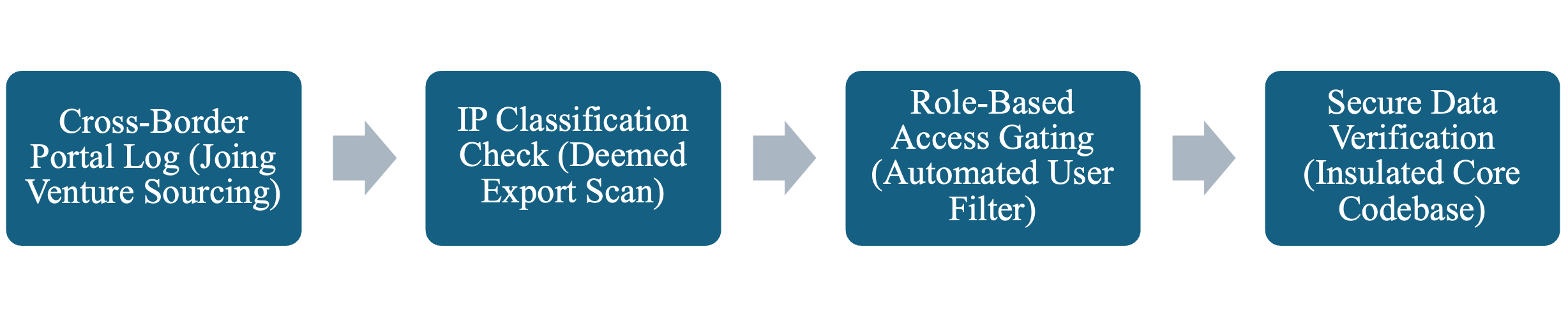
The core compliance threshold required the implementation of absolute logical data separation within all collaborative technical environments. International commercial agreements had to move away from open, shared networks toward highly restricted data access models.
Contracts had to explicitly define the boundaries of information exchange, isolating core corporate software codebases, encryption systems, and proprietary manufacturing blueprints from the joint venture's common workspace. Failing to enforce these boundaries exposed the corporation to immediate regulatory penalties and the forced dissolution of important global partnerships.
Joint Venture Operational Frameworks
Insulated Project Sandbox: Highly restricted technical networks completely isolated from core corporate systems, allowing data access strictly to cleared personnel.
Monitored Transfer Frameworks: Collaborative environments regulated by automated cryptographic access controls and real-time transaction tracking.
Restricted Technical Streams: Critical proprietary sectors—including base system code or advanced processing configurations—subject to absolute sharing blocks.
Comprehensive Compliance Checklist
Classify Collaboration Assets: Review all technology assets, software source code, and hardware specifications shared within joint ventures against updated dual-use export control registers.
Implement Role-Based Access Controls: Deploy secure, identity-gated authentication systems to prevent foreign corporate personnel from accessing restricted engineering repositories.
Insert Sanction Protection Clauses: Include explicit, zero-penalty exit mechanisms in all international joint venture agreements, allowing immediate termination if a partner faces economic sanctions.
Conduct Joint Compliance Audits: Run routine, documented technical inspections of shared project environments to verify that data access boundaries remain intact.
This publication, which we believe may be of interest to our clients and friends of Palantir Advisors, is for general information only. It should not be relied upon as legal advice as facts and circumstances may vary. The sharing of this information will not establish a client relationship with the recipient unless Palantir Advisors is or has been formally engaged to provide legal services.
© 2026 Palantir LLC. All rights reserved.