
technology, sourcing & data governance review
2022 annual report
CONTENTS
Chapter 1: Advanced Data Governance & Foundations of AI Privacy
1.1: The Transatlantic Data Pipeline Emergency: Managing Legacy Contract Invalidations and Deploying Fallback Processing Addendums
1.2: The Consumer Tracking Enforcement Wave: Restructuring Web Architectures to Mitigate Punitive Cookie Penalties
1.3: Adtech Inversion and Data Deletion Mandates: Navigating Algorithmic Disgorgement Penalties for Illicit Data Collection
Chapter 2: Digital Solutions, Transformation & Tech Ecosystems
2.1: State-Level Privacy Fragmentations: Deploying Geo-Fenced Web Portals to Handle Emerging State Privacy Statutes
2.2: The Overhaul of Shared Identity Management: Transitioning to Zero-Trust Authentication in Distributed Environments
2.3: Legacy System Modernization and API Vulnerabilities: Insulating Enterprise Software Pipelines During Cloud Transitions
Chapter 3: Software Development, Integration & Enterprise Licensing
3.1: The Open-Source Vulnerability Crisis: Restructuring Tech Transaction Warranties to Eliminate "As-Is" Software Ingestion
3.2: Legacy System Migrations & Cloud Transitions: Restructuring Cloud Licensing Terms to Prevent Punitive Over-Usage Assessments
3.3: Dynamic Scale Licensing Agreements: Renegotiating Multi-Tenant User Seat Structures to Control Variable Cost Spikes
Chapter 4: Strategic Sourcing & Commercial Transactions
4.1: Just-in-Time Supply Chain Breakdown: Overhauling Procurement Covenants and Transitioning to Multi-Region Sourcing Allocation
4.2: Cross-Border Joint Venture Safeguards: Protecting Intellectual Property and Navigating Rapid Sanctions Expansions
4.3: Multi-Tier Supplier Audits: Establishing Complete Chain-of-Custody Tracking Across Restricted Material Corridors
Chapter 1: Advanced Data Governance & Foundations of AI Privacy
1.1 The Transatlantic Data Pipeline Emergency: Managing Legacy Contract Invalidations and Deploying Fallback Processing Addendums
International corporate operations faced a critical administrative crisis following the complete judicial invalidation of legacy cross-border data transfer frameworks. Multinational enterprises that relied on traditional, broad self-certification structures to move data between international subsidiaries found their data-sharing pathways legally unauthorized overnight. This sudden compliance gap forced legal teams to rapidly audit global database networks to prevent immediate, court-ordered data processing halts.
The primary compliance challenge focused on the mandatory transition to updated, modular Standard Contractual Clauses (SCCs). Corporate legal departments could no longer utilize generic, single-page data transfer agreements. Organizations were legally required to execute comprehensive Data Processing Addendums (DPAs) that explicitly matched the precise data relationship of each transfer channel, whether operating as controller-to-controller or processor-to-subprocessor.
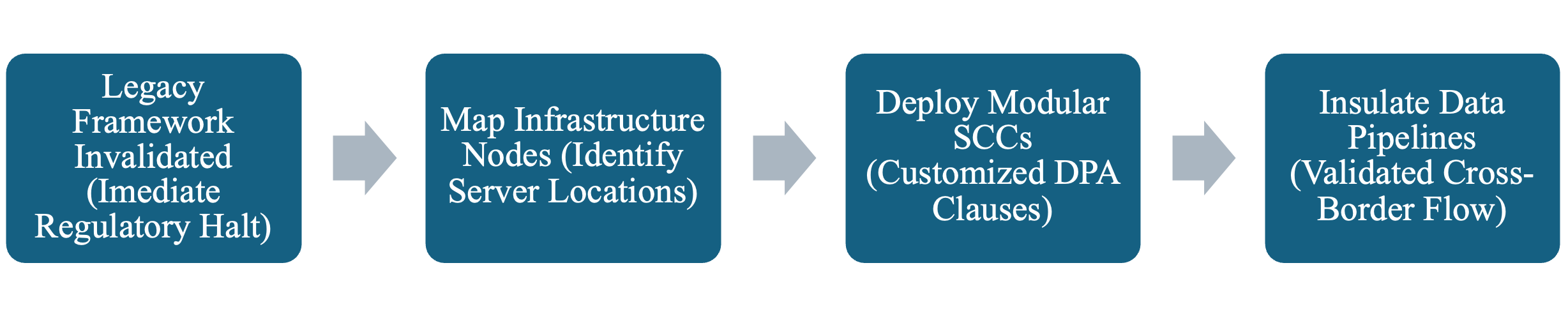
Furthermore, data protection authorities launched aggressive audit campaigns targeting high-volume data sectors, particularly cloud storage providers, healthcare networks, and international financial institutions. Operating an unverified cross-border data pathway carried immediate statutory liabilities, including administrative fines of up to 4% of global annual turnover. To maintain compliance and protect core business continuity, legal teams had to combine these modular clauses with strict technical safeguards, such as regional encryption keys under localized corporate control, to insulate outbound data streams from foreign surveillance access.
Cross-Border Transfer Protocol
MAP GLOBAL NODES Identify every international server location, subsidiary database, and third-party SaaS cloud node.
CLASSIFY ROLES Assign precise contractual classifications (Controller/Processor) for each distinct data pathway.
EXECUTE MODULAR SCCs Ingest updated, legally compliant standard contractual clauses into all active vendor agreements.
LOCK CRYPTOGRAPHY Deploy advanced encryption parameters where encryption keys remain under exclusive corporate control.
Comprehensive Compliance Checklist
Audit Outbound Data Flows: Conduct an enterprise-wide technical audit to identify and document every cross-border data routing pathway across all corporate entities.
Update Legacy Vendor DPAs: Formally renegotiate active master service agreements to replace outdated data transfer text with the mandatory modular contractual clauses.
Assess Destination Legal Risks: Complete documented, localized risk reviews for every destination country to evaluate potential foreign government data access exposures.
Implement Data Tokenization: Deploy technical data minimization safeguards, such as pseudonymization and tokenization, across all sensitive cross-border datasets.
1.2 The Consumer Tracking Enforcement Wave: Restructuring Web Architectures to Mitigate Punitive Cookie Penalties
Multinational enterprises faced intense litigation and regulatory scrutiny as international enforcement agencies launched a coordinated campaign against unauthorized consumer data harvesting, deceptive interface patterns, and unconsented web tracking. Regulatory bodies issued historic financial penalties against major digital platforms for tracking users without explicit, affirmative consent. This enforcement wave made it clear that passive web tracking—such as relying on pre-checked opt-in boxes or vague "by continuing to browse, you agree" notices—was no longer legally defensible.
The core regulatory risk centered on violations of statutory data minimization and user autonomy mandates. Web architectures that automatically loaded tracking pixels, behavioral advertising cookies, or analytics scripts before a user explicitly granted consent were flagged as non-compliant during automated regulatory scans.

Consequently, technology executives and corporate counsel had to execute an immediate restructuring of their public-facing digital architectures. Enterprises were forced to transition to strict script-blocking frameworks, where all non-essential tracking mechanisms remain completely inactive until the consumer actively interacts with a clear, balanced consent management interface.
Digital Inbound Consent Tiers
Essential System Cookies: Technical scripts required strictly to maintain website security, network loading, and core user-requested functionalities; exempt from opt-in mandates.
Analytics Tracking Layers: Performance-monitoring code designed to evaluate internal user journeys, requiring clear transparency disclosures and active consent gates.
Behavioral Advertising Pixels: Highly regulated third-party tracking networks that build individual consumer profiles, carrying the highest statutory penalty exposure if pre-loaded.
Comprehensive Compliance Checklist
Audit Digital Script Inventories: Deploy automated network scanners to identify, log, and classify every pixel, tag, and cookie running across corporate web domains.
Enforce Strict Script Blocking: Configure website source code to completely block all non-essential tracking scripts from executing prior to explicit user authorization.
Eliminate Deceptive Interface Elements: Review consent banner configurations to ensure that "Reject All" and "Accept All" choices are presented with equal visual prominence.
Maintain Auditable Consent Logs: Implement secure, time-stamped databases to record individual consumer tracking choices, satisfying statutory regulatory validation rules.
1.3 Adtech Inversion and Data Deletion Mandates: Navigating Algorithmic Disgorgement Penalties for Illicit Data Collection
Enforcement metrics shifted dramatically as regulatory bodies began exercising a powerful new enforcement mechanism: algorithmic disgorgement. Beyond issuing standard fiscal fines, authorities successfully forced corporations to completely destroy proprietary machine learning models, lookalike audiences, and analytical software frameworks if they were built or optimized using unconsented consumer data profiles. This operational penalty transformed data governance from a passive policy layer into a critical product survival requirement.
The core vulnerability centered on data "cleanliness" and software lineage. If an organization built a conversion-optimization algorithm or a customer analytics suite using data feeds scraped or tracked via legacy web setups, the entire technical stack faced immediate deletion orders.
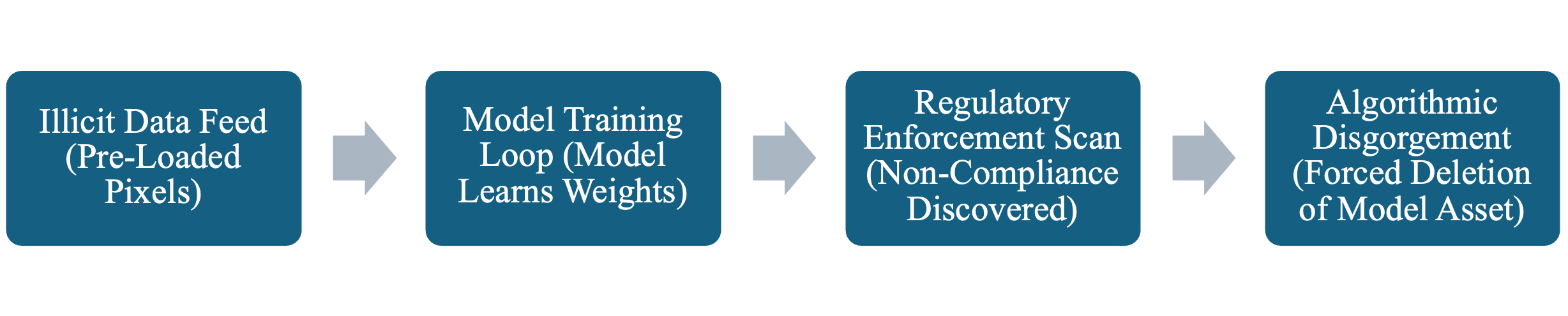
Consequently, software publishers and commercial data aggregators had to execute immediate data lineage audits. Sourcing teams had to verify the provenance of all historic, third-party, and licensed datasets used within internal software development. Failing to prove clear user consent across every layer of the training input ledger resulted in the direct destruction of critical corporate software assets.
Corporate Data Lineage Tiers
Clean-Room Attested Sets: Data assets logged with explicit, verifiable user consent tags matching modern international criteria; safe for algorithmic training loops.
Legacy Aggregated Pools: Historic information stacks lacking individual consent tracking histories, requiring structural filtering or immediate segregation.
Contaminated Inbound Feeds: Pixels or vendor lists compiled via unvetted tracking networks, carrying an immediate algorithmic disgorgement risk.
Comprehensive Compliance Checklist
Audit Algorithmic Training Inbound: Execute an immediate software lineage audit across all proprietary analytical and conversion-optimization models to verify input compliance.
Purge Uncertified Consumer Databases: Systematically erase historic data profiles lacking explicit, documented user opt-in records to prevent model contamination.
Implement Data Provenance Tags: Deploy cryptographic or machine-readable metadata tags to track the precise consent source of all incoming data assets.
Establish Technical Disgorgement Firewalls: Build software isolation mechanisms to ensure that high-value model architectures can be decoupled from unvetted data stores without forcing a total system rebuild.
Chapter 2: Digital Solutions, Transformation & Tech Ecosystems
2.1 State-Level Privacy Fragmentations: Deploying Geo-Fenced Web Portals to Handle Emerging State Privacy Statutes
Enterprise digital solutions and cloud infrastructure strategies faced extreme complexity as individual US states began enacting and preparing hyper-granular data privacy statutes. Operating in the absence of a unified federal data framework, organizations quickly found that standard national IT configurations were no longer compliant.
Each state-level framework introduced distinct, localized definitions of consumer data privacy rights, strict dynamic disclosure mandates, and highly variable legal enforcement mechanisms. This fragmented landscape required an immediate transition toward adaptable software deployment models.
The core operational challenge focused on managing regional tracking boundaries dynamically. For instance, certain state structures required strict opt-out paths for targeted advertising and automated profiling, while others mandated specialized handling for sensitive geolocation coordinates and biometrics. To maintain compliance without destroying online consumer experiences, technology teams had to move away from static, uniform privacy structures. They began hard-coding geo-fenced user-access portals directly into their enterprise application architectures to detect user locations and apply specific state privacy rules in real time.
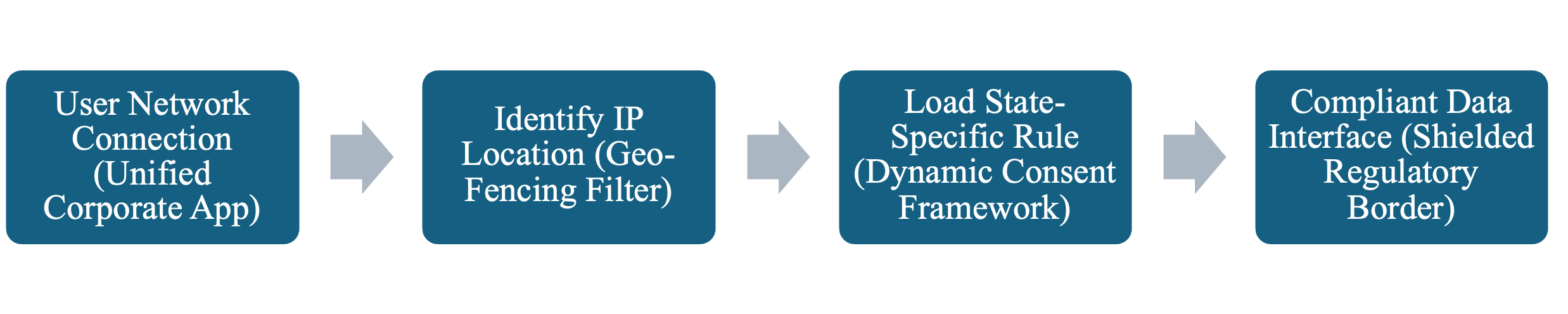
Regional Compliance Framework Levels
Strict Consumer Rights Boundaries: Regional jurisdictions mandating explicit, frictionless opt-out buttons, mandatory data minimization audits, and formal risk filings.
Standard Transparency Tiers: Jurisdictions requiring detailed data processing notices, structured consumer access requests, and verified data security validations.
Localized Sector Constraints: Hyper-specific regional rules focusing exclusively on the protection of high-risk data assets, such as children's metrics or health logs.
Comprehensive Compliance Checklist
Deploy Geo-Fenced IT Filters: Integrate automated location-detection tools within corporate web properties to deliver customized privacy frameworks matching the user's state.
Map Multi-Jurisdictional Data Assets: Update the central corporate data index to trace exactly how consumer data fields are categorized, routed, and shared across state borders.
Standardize Universal Opt-Out Processing: Configure enterprise system interfaces to recognize and process global privacy control signals automatically across all web properties.
Execute Regional Data Impact Appraisals: Establish formal, written workflows to complete Data Protection Impact Assessments (DPIAs) for high-risk corporate analytics programs.
2.2 The Overhaul of Shared Identity Management: Transitioning to Zero-Trust Authentication in Distributed Environments
The rapid expansion of distributed corporate tech environments accelerated a critical vulnerability wave targeting shared identity management, single-sign-on (SSO) systems, and cross-platform access points. Sophisticated credential-stuffing campaigns and social engineering attacks frequently compromised weak employee authentication paths. These security breaches granted unauthorized actors deep access to core multi-tenant corporate cloud environments. This structural exposure made it clear that traditional, perimeter-based network defenses were completely insufficient to protect modern enterprise digital transformation ecosystems.
The primary legal and technical challenge involved eliminating hard-coded access keys and static access permissions within corporate network software. If an external vendor or remote contractor sustained an identity breach, the compromised credentials could allow lateral movement across an enterprise's entire private database architecture. To protect corporate intellectual property and remain aligned with international data security mandates, technology leaders had to enforce a total pivot toward zero-trust authentication. This model requires continuous, context-aware validation of every user, device, and network connection before any data exchange can occur.

Identity Gating Operational Phases
IDENTITY VERIFICATION Require robust, multi-factor authentication (MFA) parameters across every employee login attempt.
CONTEXT CHECKING Analyze connecting device health, geographic origin, and network safety indicators in real time.
LEAST-PRIVILEGE ACCESS Restrict system user rights to the absolute minimum data fields required for specific operational tasks.
CONTINUOUS VALIDATION Deploy automated session-monitoring tools to flag, throttle, or terminate connections demonstrating anomalous behavior.
Comprehensive Compliance Checklist
Enforce Enterprise Multi-Factor Gating: Implement mandatory multi-factor authentication across all corporate access points, legacy software integrations, and remote cloud systems.
Map and Limit Lateral Access: Conduct a comprehensive privilege audit to strip out permanent admin access tokens and enforce strict least-privilege data partitions.
Deploy Context-Aware Firewalls: Configure identity access management software to automatically block connections from unvetted devices or unexpected geographic profiles.
Execute Vendor Authentication Reviews: Require all third-party software integrations to deliver verified security certificates confirming zero-trust connectivity compliance.
2.3 Legacy System Modernization and API Vulnerabilities: Insulating Enterprise Software Pipelines During Cloud Transitions
As corporations scaled down on-premise hardware division footprints, the acceleration of legacy platform migration to hybrid cloud architectures created massive digital transformation friction. Operational teams frequently rushed code lifecycles, exposing highly vulnerable legacy application programming interfaces (APIs) to the public internet. Malicious actors targeted these poorly configured technical connectors, utilizing them to bypass firewall boundaries and scrape core corporate data stores without triggering traditional security parameters.
The primary operational risk centered on broken object-level authorization (BOLA) flaws. In the rush to connect historical back-office software to modern web environments, developers often omitted granular access validations within open API scripts. To protect digital asset continuity, corporate technology officers had to completely overhaul their software transaction architectures. They established automated API security gateways, hard-coded rigorous endpoint validation routines, and mandated continuous penetration testing throughout the life of the migration window.
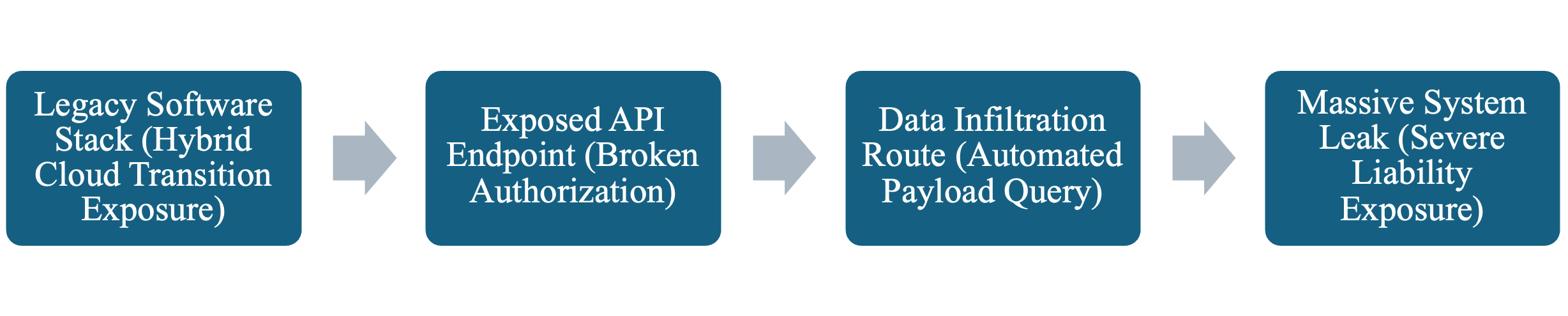
API Security Inbound Tiers
Insulated Cloud Gateways: Endpoints hardened by automated token validations, real-time rate throttling, and continuous signature inspections.
Internal Routing Paths: Software integrations running strictly within local corporate network borders, isolated from external web queries.
Legacy Open Ports: Unmonitored, hard-coded connectors lacking contemporary multi-factor authentication controls, requiring an immediate operational shutdown.
Comprehensive Compliance Checklist
Audit API Integration Catalogs: Perform deep technical reviews across all web domains to discover, trace, and index every outward-facing API pipeline.
Enforce Granular Access Keys: Restructure software connectivity layouts to mandate strong, unique token-based authorization protocols for all database queries.
Deploy Automated Rate Throttling: Install dynamic technical caps within web portals to instantly block and flag suspicious, high-frequency data extraction behavior.
Validate Transition Security Logs: Execute continuous, documented code vulnerability reviews on all bridge software platforms connecting legacy arrays to public clouds.
Chapter 3: Software Development, Integration & Enterprise Licensing
3.1 The Open-Source Vulnerability Crisis: Restructuring Tech Transaction Warranties to Eliminate "As-Is" Software Ingestion
The global software development landscape faced a profound crisis following systemic security vulnerabilities discovered within widely used open-source logging libraries and code dependencies. Because thousands of commercial software applications and enterprise cloud suites had blindly integrated these open-source code blocks without tracking their lineages, organizations worldwide found their data environments exposed to immediate exploitation. This crisis effectively ended the commercial acceptability of "as-is" software product delivery, transforming how enterprise software transactions are negotiated.
Consequently, enterprise software buyers and commercial legal teams executed a structural rewrite of technology transaction warranties and intellectual property covenants. Corporate software buyers aggressively pushed back against legacy vendor terms that shielded software publishers from product liability. Sourcing operations began mandating the delivery of comprehensive, machine-readable Software Bills of Materials (SBOMs). These records force software vendors to legally represent, warrant, and patch every single open-source sub-component integrated into their commercial platforms.
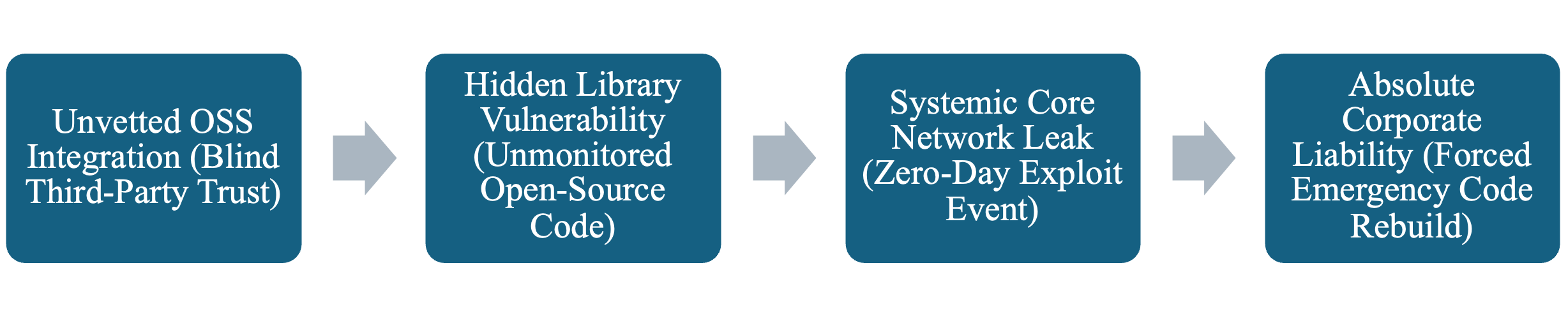
Software Code Component Tiers
Unvetted Third-Party Dependencies: Open-source code packages pulled from public repositories without automated inventory tracking, carrying an absolute installation ban.
Documented Software Assets: Commercial software packages delivered with verified, machine-readable bills of materials and explicit vendor vulnerability patching timelines.
Proprietary Certified Code: In-house software modules developed within audited clean-room environments under absolute corporate supply chain oversight.
Comprehensive Compliance Checklist
Enforce Mandatory SBOM Delivery: Insert non-negotiable clauses into all software procurement contracts requiring vendors to supply a machine-readable Software Bill of Materials with every release.
Revise Master Software Warranties: Strip out boilerplate "as-is" software performance disclaimers from all incoming vendor license templates, replacing them with absolute security representations.
Deploy Dependency Scan Routines: Integrate automated static and dynamic dependency scanners directly into internal software engineering pipelines to detect vulnerable open-source fragments.
Define Strict Remediation Windows: Embed legally binding service level agreements (SLAs) compelling software suppliers to deliver critical security patches within specified hours of vulnerability discovery.
3.2 Legacy System Migrations & Cloud Transitions: Restructuring Cloud Licensing Terms to Prevent Punitive Over-Usage Assessments
Multinational enterprises accelerated their transitions away from localized on-premise infrastructure toward scalable, multi-cloud hosting environments to lower operational costs. However, these complex digital transformations quickly triggered intense financial and legal conflict with legacy software publishers. Incumbent vendors launched aggressive corporate licensing compliance audits. They claimed that moving legacy software architectures to modern cloud servers violated historic "per-core" virtualization restrictions, resulting in punitive retro-billing assessments.
The core legal challenge centered on navigating ambiguous contract text regarding virtualized execution environments. Software publishers argued that running an instance of their database application within a shared cloud server required the enterprise to purchase user licenses for every computational core available on that server network. To resolve these massive financial threats, corporate procurement teams had to completely restructure their cloud infrastructure agreements. They moved to implement strict dedicated cloud partitions and transition to optimized, consumption-based enterprise licensing.

Cloud Migration Deployment Lifecycle
VIRTUALIZATION LOGGING Map and audit all virtualized environments hosting legacy software applications to measure exact computational deployment footprints.
ISOLATED NODE BLOCKING Configure cloud server architectures to isolate legacy software systems within dedicated, single-tenant processing environments.
REVENUE LEAK REVIEW Conduct preemptive software asset reviews to catch and remediate user seat and core allocation discrepancies before vendor audits.
METERED CONTRACT SHIFT Renegotiate upcoming master software renewals to establish transparent, cloud-native utility subscription frameworks.
Comprehensive Compliance Checklist
Review Contract Virtualization Rules: Conduct deep contract reviews of all legacy software agreements to identify restrictions surrounding multi-tenant cloud processing.
Isolate Hosted Legacy Systems: Configure cloud network configurations to restrict legacy enterprise software to dedicated, single-tenant cloud instances to prevent core-licensing overages.
Establish Central SAM Controls: Deploy automated Software Asset Management platforms to trace and log real-time software core allocations and active user paths across cloud systems.
Negotiate Audit Notification Guardrails: Revise master software procurement terms to mandate extended, 30-day formal notification windows and restricted data-access protocols for vendor compliance audits.
3.3 Dynamic Scale Licensing Agreements: Renegotiating Multi-Tenant User Seat Structures to Control Variable Cost Spikes
The widespread adoption of cloud-hosted, multi-tenant Software-as-a-Service (SaaS) operational models fundamentally transformed enterprise tech budgeting, rendering rigid, multi-year flat-rate procurement contracts obsolete. Sourcing teams frequently encountered severe budget overruns when automated enterprise scaling rules added hundreds of unvetted, high-cost user seats during sudden operational spikes. Without proactive technical and contractual caps, organizations faced unexpected financial liabilities and retroactive compliance penalties during vendor-led billing reviews.
The core compliance threshold required the integration of strict license allocation guardrails within central IT dashboard setups. Software procurement managers had to re-engineer their master subscription frameworks to establish variable user-seat windows, dynamic notification gates, and explicit overage grace periods. Failing to build these structural spending boundaries left corporations completely dependent on vendor metrics, resulting in significant commercial disputes and immediate service disruption risks if payments were withheld.
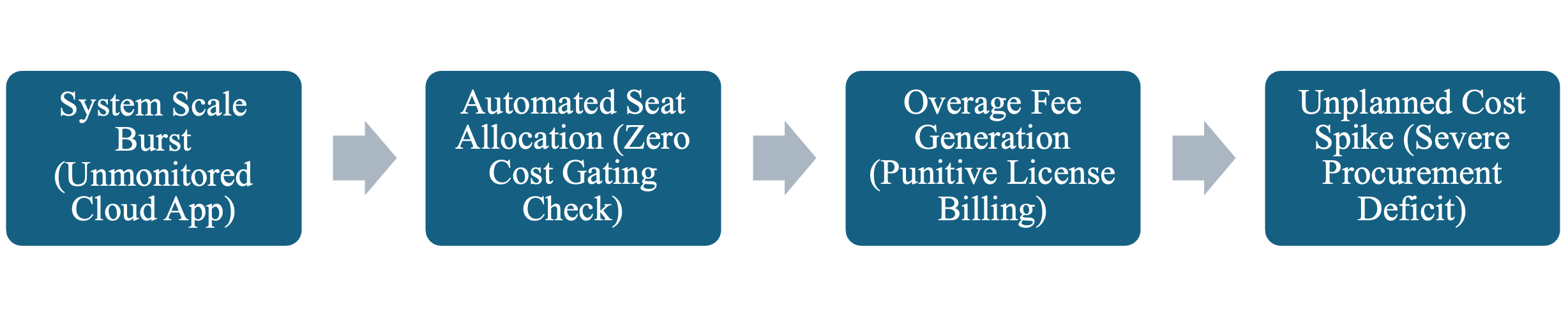
SaaS Licensing Parameter Frameworks
Variable Scale Pools: Flexible subscription structures that allow user counts to fluctuate dynamically within preset baseline spending parameters.
Dedicated Seat Quotas: Hard-capped user access allotments controlled by central IT administrative desks to prevent unauthorized maverick software provisioning.
Unmonitored Enterprise Access: Flat-rate user models lacking localized dashboard logging, carrying elevated financial exposure risks during automated audit reviews.
Comprehensive Compliance Checklist
Embed Cost Notification Triggers: Configure all master SaaS procurement contracts to require automated alerts before active license counts hit billing limits.
Standardize Overage Grace Windows: Secure binding, multi-week adjustment periods within vendor agreements to resolve temporary system use bursts without immediate penalty.
Implement Centralized Access Controls: Restrict software provisioning capabilities exclusively to authorized IT asset procurement leads to prevent maverick seat assignment.
Deconstruct Bundled Contract Portals: Force enterprise software suppliers to unbundle unused suite features, paying strictly for active, high-utility application modules.
Chapter 4: Strategic Sourcing & Commercial Transactions
4.1 Just-in-Time Supply Chain Breakdown: Overhauling Procurement Covenants and Transitioning to Multi-Region Sourcing Allocation
Global strategic sourcing and commercial procurement operations faced extreme structural disruption as international trade networks sustained massive supply shocks. Decades of corporate reliance on hyper-efficient, "just-in-time" single-source international manufacturing pipelines collapsed under the combined weight of pandemic ripple effects, severe labor shortages, and energy allocation cutoffs. This operational environment rendered traditional single-region procurement models obsolete. Sourcing executives had to execute a rapid shift from cost-minimization toward long-term operational resilience.
The primary legal hurdle in this crisis involved managing widespread contract defaults and navigating uncoordinated force majeure declarations across international supplier networks. Standard boilerplate contract language was frequently legally insufficient to clearly resolve responsibility for multi-month component allocation delays. Unwinding these vulnerabilities required procurement teams to thoroughly overhaul their master purchase orders. They dismantled single-vendor exclusivity covenants and introduced dynamic multi-region volume allocation clauses, allowing corporations to instantly shift production parameters between primary and secondary nearshore suppliers when local logistics networks failed.
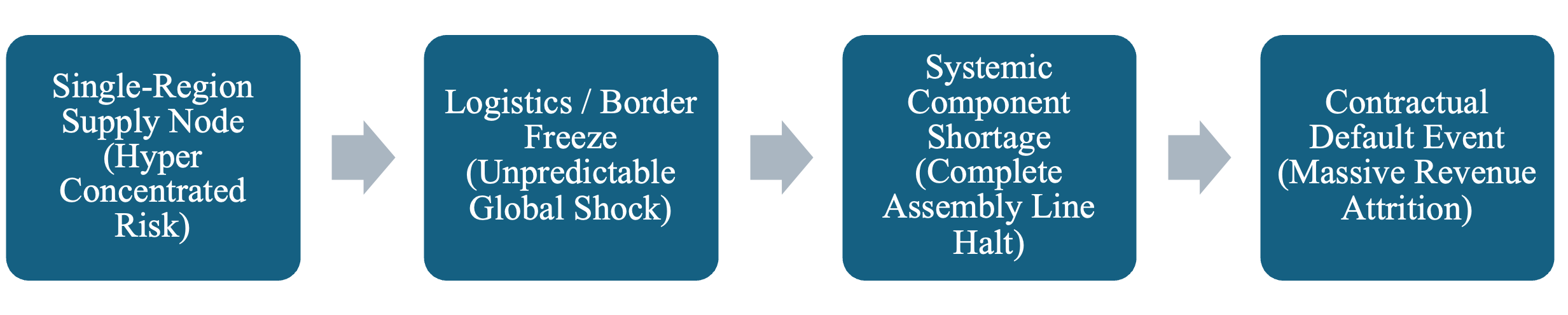
Redundant Sourcing Allocation Matrices
Primary Geographic Sourcing: Core manufacturing partners managing standard high-volume component production, bound to strict, real-time inventory reporting.
Nearshore Redundancy Channels: Secondary suppliers maintained in stable regional proximity, contractually cleared to ingest redirected production capacity instantly.
Spot-Market Procurement Pools: Pre-vetted alternative vendor registries authorized for short-term commodity buying to clear temporary manufacturing backlogs.
Comprehensive Compliance Checklist
Dismantle Single-Source Exclusivity: Review and rewrite all active procurement templates to strip out restrictive single-vendor exclusivity locks or mandatory minimum purchase orders.
Embed Dynamic Allocation Provisions: Insert flexible contractual text in all master supply agreements, granting the firm the absolute right to reallocate order volumes between suppliers without penalty.
Deconstruct Force Majeure Criteria: Revise contract boilerplate to explicitly define the boundaries of excusable delivery delays, removing generic economic hardships from force majeure coverage.
Establish Emergency Sourcing Playbooks: Conduct comprehensive multi-region onboarding reviews to pre-clear alternative component suppliers against domestic import and compliance rules.
4.2 Cross-Border Joint Venture Safeguards: Protecting Intellectual Property and Navigating Rapid Sanctions Expansions
International corporate alliances and joint cross-border transactional ventures faced severe legal friction due to the rapid, unprecedented expansion of global economic sanctions, corporate asset restrictions, and trade blacklists. Sourcing ventures that featured shared manufacturing facilities, joint research portals, or integrated supply chain logistics platforms faced immediate legal exposure. Failing to establish rigorous compliance firewalls across these shared corporate properties created severe risks, as transactions with an international partner could suddenly violate national security directives if that partner or its subsidiaries became subject to updated sanctions registries.
The core compliance threshold required the implementation of absolute, role-based technical gating and robust data separation within all cross-border joint venture spaces. Corporate counsel had to move away from legacy, trust-based international partnership frameworks toward strict identity-verified containment strategies. Contracts had to incorporate clear, unilateral exit triggers that permitted the enterprise to instantly terminate a commercial alliance, seize shared technical portals, and freeze joint corporate funds without penalty the moment a counterparty triggered international regulatory scrutiny.

Joint Venture Legal Separation Steps
SANCTIONS SCREENING Subject all international corporate partners, corporate board members, and primary sub-contractors to continuous automated sanctions monitoring.
DATA PERIMETER GATE Isolate core proprietary engineering blueprints, system architectures, and software source code within localized, access-restricted databases.
UNILATERAL TERMINATION Draft specific national security escape triggers allowing the enterprise to dissolve the joint venture instantly upon regulatory changes.
ASSET CONTAINMENT PORTAL Configure collaborative technical environments to ensure data visibility is restricted strictly to pre-vetted project variables.
Comprehensive Compliance Checklist
Audit Joint Venture IP Exchanges: Review all technical specifications, code repositories, and manufacturing data fields shared within international alliances against export control registries.
Deploy Automated Sanctions Tracing: Integrate continuous compliance scanning software into corporate enterprise resource planning software to cross-reference partner names against updated global blacklists daily.
Embed National Security Exit Provisions: Mention strict, non-negotiable closing and termination conditions in all international transactional documents to guarantee zero-penalty exit pathways.
Isolate Shared Corporate Networks: Enforce absolute, cryptographically verified user authentication barriers across all corporate engineering networks to block unauthorized foreign data visibility.
4.3 Multi-Tier Supplier Audits: Establishing Complete Chain-of-Custody Tracking Across Restricted Material Corridors
The implementation of rigid international environmental tracing laws and forced labor import bans forced a total reconstruction of standard industrial sourcing diligence. Strategic procurement units could no longer depend on simple, unverified Tier 1 supplier compliance questionnaires to clear customs barriers. Sourcing architectures had to ensure complete, multi-tier chain-of-custody visibility running from raw sub-tier material processing nodes all the way to final delivery points.
The core legal risk centered on structural negligence claims and immediate border asset seizures. If a secondary component provider or raw resource refinery utilized materials sourced from restricted geographical regions or unvetted entities, the final distributed commercial product faced immediate seizure by customs enforcement teams. Consequently, purchasing enterprises had to move away from reactive contract tracking frameworks. They integrated automated, cryptographically signed ledger tracing tools directly into their global production pipelines, tracking the exact point of origin for all inbound physical components.
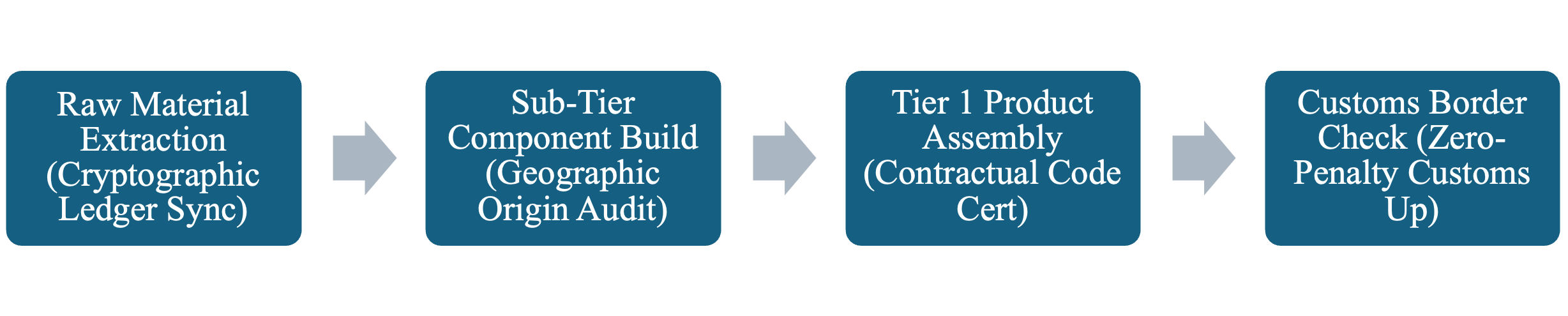
Industrial Material Tracing Phases
Phase 1: Upstream Asset Mapping: Comprehensive digital tracking of all sub-tier component suppliers, raw material processing plants, and extraction locations.
Phase 2: Contractual Indemnity Insertion: Execution of strict origin warranties compelling suppliers to supply verified bills of lading on demand.
Phase 3: Border Simulation Reviews: Routine, independent internal compliance checks of supply documentation ahead of official customs filings.
Comprehensive Compliance Checklist
Deploy Upstream Mapping Networks: Install advanced supply chain tracing software to trace and log all sub-tier components back to raw extraction facilities.
Enforce Strict Origin Documentation: Embed non-negotiable contractual terms requiring all Tier 1 suppliers to pass down auditable data tracking rules to sub-tier networks.
Execute Preemptive Customs Audits: Schedule regular internal audits of manufacturing logs to ensure data readiness before formal trade declarations are completed.
Verify Material Refinery Compliance: Perform documented technical checks of international raw material sources to identify and isolate unvetted production tracks.
This publication, which we believe may be of interest to our clients and friends of Palantir Advisors, is for general information only. It should not be relied upon as legal advice as facts and circumstances may vary. The sharing of this information will not establish a client relationship with the recipient unless Palantir Advisors is or has been formally engaged to provide legal services.
© 2026 Palantir LLC. All rights reserved.