
executive briefings
Executive Briefing / April 2025
Splitting Technology and Data in Corporate Deals: Managing Shared Software, Transition Risks, and Business Continuity When Selling a Division
Executive Overview
When selling a division of a company or spinning off a business unit, separating the organization requires far more than just dividing standard corporate assets and offices. Because modern business operations are deeply woven into shared corporate networks, unbundling a subsidiary means carefully separating shared software platforms, central databases, and overlapping technology rights.
Failing to precisely structure the technology separation before the deal closes can trap the seller in lengthy, expensive support agreements with the buyer, trigger massive software license duplication fees, and cause severe operational downtime for the newly independent company. This briefing analyzes the critical traps hidden in technology separation and outlines practical, contractual strategies to ensure a clean break and protect your deal's valuation.
Critical Risk Vector: The "Software License Splitting" Trap
One of the most expensive blind spots when dividing a company is assuming that the parent company’s enterprise software licenses can automatically be handed over or shared with the business unit being sold.
The Exposure: Standard contracts with major software providers (such as accounting databases, enterprise management systems, and cloud storage) contain strict ownership clauses and absolute bans on transferring the software to another company.
The Transactional Impact: The moment a subsidiary is sold, it legally becomes an unauthorized third party to the software provider. If your deal team fails to pre-negotiate "right to use" extensions or formal license splits with the software vendors before closing, the newly independent company faces an immediate loss of system access. Alternatively, the parent company may be hit with severe back-billing penalties and forced to purchase entirely new software packages at current retail market rates just to close the deal.
The Contractual Remedy: Deal teams must run a comprehensive inventory of all software assets during the initial due diligence phase. Master transaction documents must include clear requirements that force technology vendors to deliver written consent for license transfers or system splits before the final sale is signed.
Structural Stability Vector: The Danger of Open-Ended Support Agreements
When a technology system cannot be cleanly separated by the closing date, the selling company routinely agrees to provide temporary IT support to the buyer via a Transition Services Agreement (TSA).
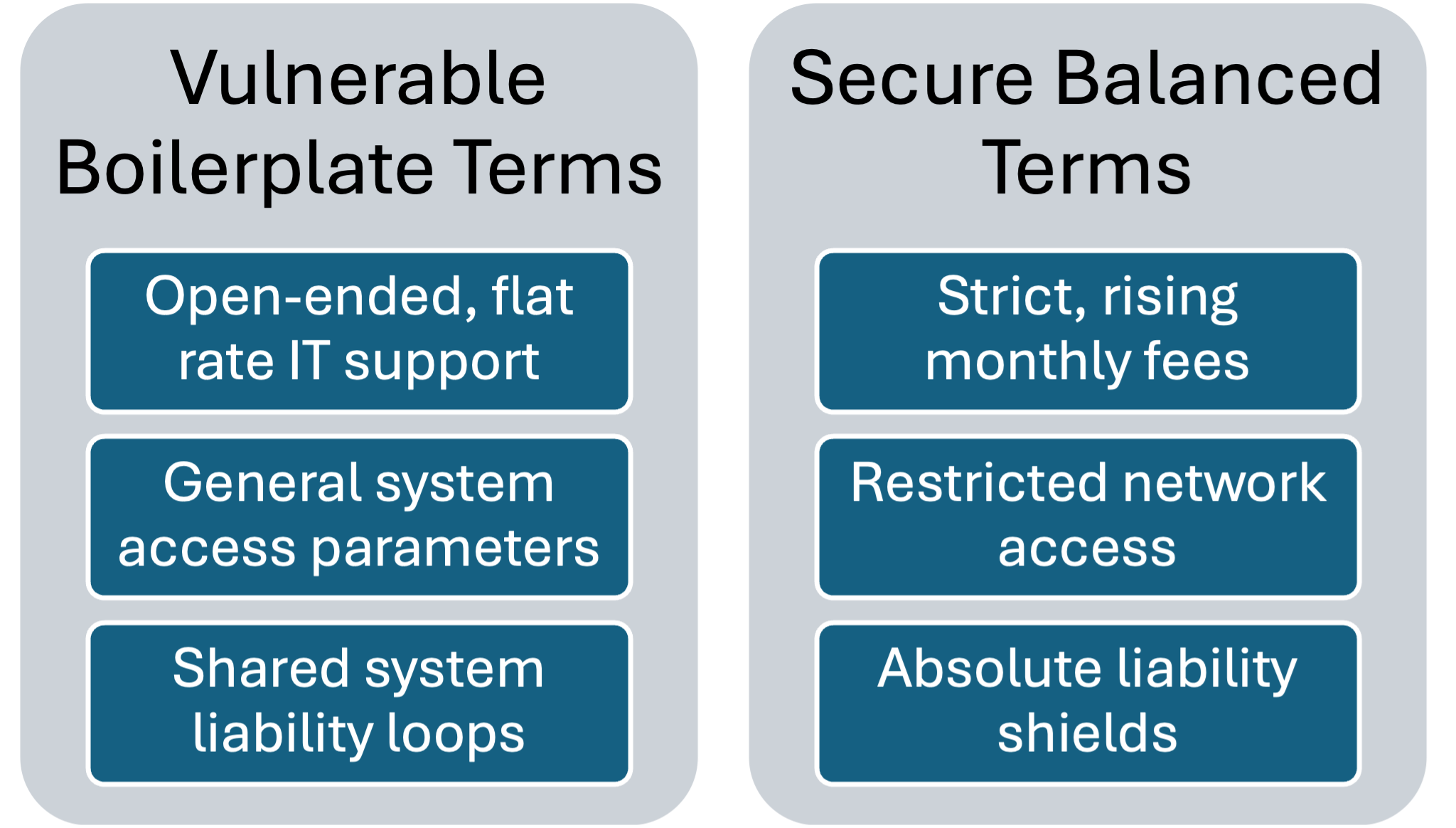
Operating a shared IT environment under a standard, open-ended agreement creates severe legal and security liabilities. If the buyer’s independent network suffers a cybersecurity breach while hooked into the seller’s legacy servers, the data breach can move sideways, exposing the seller to strict regulatory investigations and penalties.
Furthermore, unless the support agreement contains stepping monthly price hikes, the buyer has zero financial incentive to build their own systems, trapping the selling company in a low-margin, high-liability tech support relationship indefinitely.
Strategic Action Items for Corporate Deal Teams
Map Shared Systems and Records: Complete a thorough check of all software tools, application databases, and system records shared between the parent company and the division being sold to identify deep technical dependencies.
Secure Vendor Approval Early: Get binding, pre-closing commitment letters from critical software providers to authorize license transfers or partial system migrations well ahead of the closing date.
Hardcode Stepping Prices in the Support Contract: Structure the Transition Services Agreement with strict time limits and escalating monthly fees to compel the buyer to build their own independent systems rapidly.
Isolate Data Access Boundaries: Establish strict network firewalls and temporary system partitions to ensure that the buyer’s personnel can never view or access the parent company’s retained proprietary data logs.
Contact Our Team
This briefing is provided by Palantir Advisors, a global business and legal consulting practice. If you have questions about this briefing, or if you would like to discuss how these issues may impact your business operations, please reach out to us here.