
executive briefings
Executive Briefing / July 2024
Supplier Data Breaches in Commercial Contracts: Managing Notification Timelines, Forensic Cooperation, and Financial Reimbursement Covenants in Sourcing Agreements
Executive Overview
When an enterprise outsources the processing of sensitive business information or customer metrics to a third-party software vendor or cloud provider, it faces a severe compliance gap. Under modern privacy frameworks, if a supplier sustains a network intrusion, the primary company remains legally and reputationally accountable to its customers and regulatory authorities.
Standard vendor contract templates routinely include highly protective clauses designed to minimize the supplier's accountability following an incident. Vendors frequently attempt to delay notification windows, restrict your access to technical investigation logs, and shield themselves from the cascading operational costs of the breach.
This briefing analyzes the critical legal exposures hidden within standard supplier contract terms and outlines the specific contractual protections required to control vendor behavior, mandate rapid alert workflows, and secure complete financial reimbursement for downstream response expenses.
Critical Risk Vector: The Notification Delay Gap
One of the most dangerous operational risks in an active supplier breach is a delayed notification timeline.
The Exposure: Standard, unamended vendor service agreements routinely state that the supplier will notify the customer of a security incident "without undue delay" or within a wide window, such as 30 to 60 days after completing their internal technical investigation.
The Transactional Impact: If your contract allows the vendor to delay notification while running an internal review, you can easily miss strict statutory disclosure deadlines, such as tight federal reporting windows or state-level notification clocks. This communication breakdown results in immediate compliance failures and subjects your executive board to direct regulatory scrutiny.
The Contractual Remedy: Sourcing teams must hard-code a strict, objective notification clock into all master service agreements. The contract must mandate that the vendor notify your legal operations team in writing within a maximum window—such as 24 to 48 hours—of first suspecting or detecting any unauthorized system access, data extraction, or network anomaly, completely bypassing their internal review timelines.
Structural Stability Vector: Allocating the Financial Fallout of a Breach
A third-party data breach triggers substantial, unbudgeted operational expenses that can quickly drain corporate resources.
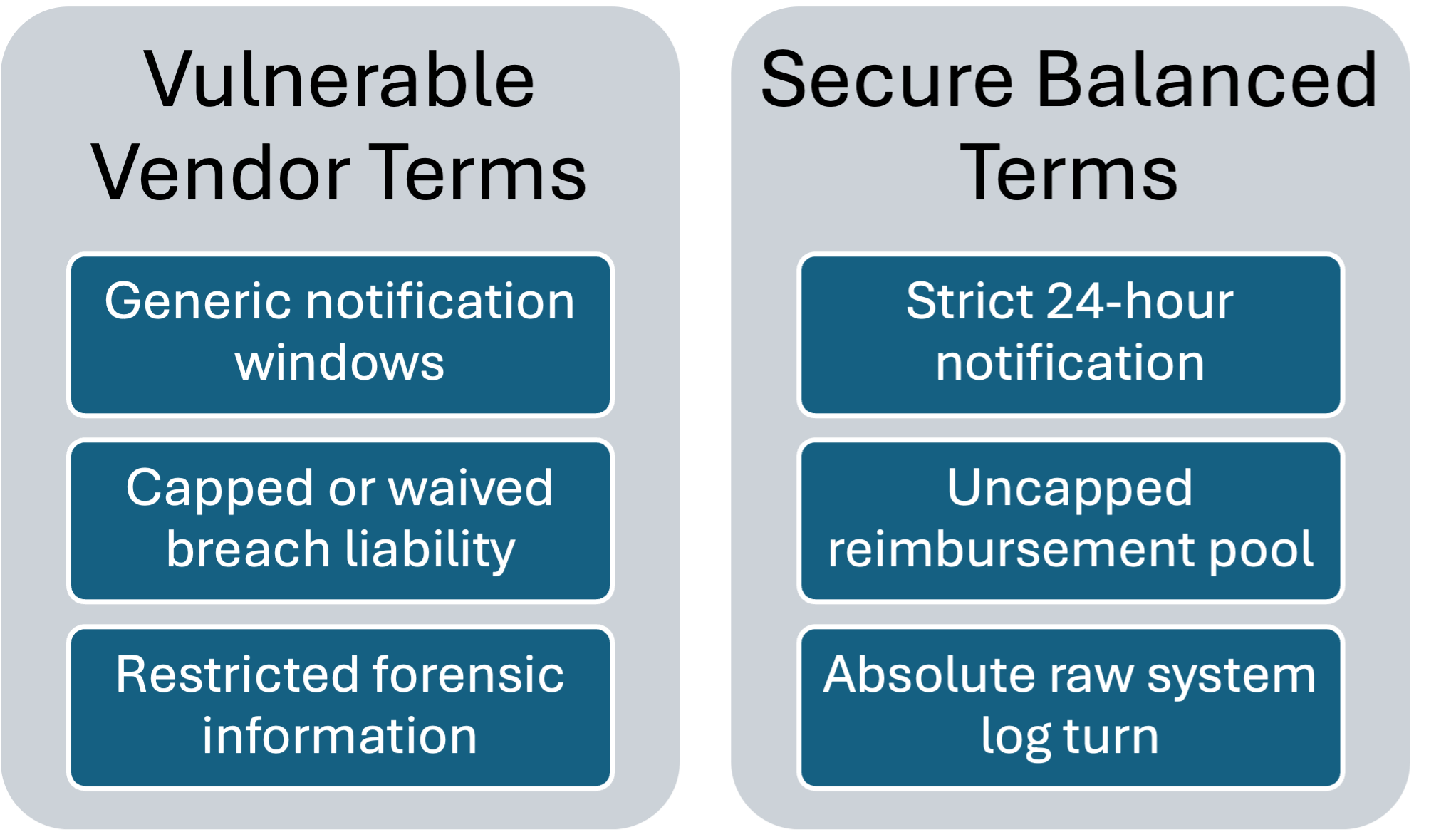
Software providers routinely use broad liability waivers to insulate themselves from "consequential damages," which legally excludes the exact downstream costs you will face. Transactional lawyers must reject these one-sided shields and insert explicit Breach Indemnification and Reimbursement Covenants.
The contract must state that if a security incident occurs on the vendor's systems, the supplier is contractually obligated to reimburse your enterprise, dollar-for-dollar, for all direct operational response costs. This reimbursement pool must be carved out from standard contract liability caps and explicitly cover:
The direct administrative cost of printing and mailing mandatory breach notices to your affected customers.
The full procurement cost of providing credit monitoring and identity theft protection services to affected users for a minimum of 12 to 24 months.
The engagement fees for independent, third-party forensic IT investigators and specialized outside legal counsel to manage your regulatory filings.
Any administrative fines levied by regulatory bodies resulting directly from the supplier's technical failure.
Strategic Action Items for Corporate Sourcing Teams
Hardcode the 24-Hour Notification Clock: Revise all active master subscription terms to require written notice of a breach within 24 hours of discovery, independent of any ongoing vendor forensic reviews.
Carve Out Breach Costs from Liability Caps: Ensure that supplier indemnification for data breaches and downstream notification/monitoring costs is completely uncapped or tied to a separate, high-value super-cap.
Mandate Raw Forensic Log Access: Insert clear covenants compelling the vendor to deliver raw system access logs, traffic details, and forensic investigation streams instantly during an active incident.
Enforce Standard Mitigation Obligations: Require the vendor to immediately execute, at their sole expense, all technical remediation steps necessary to stop an active data leak, under your direct supervision.
Contact Our Team
This briefing is provided by Palantir Advisors, a global business and legal consulting practice. If you have questions about this briefing, or if you would like to discuss how these issues may impact your business operations, please reach out to us here.