
executive briefings
Executive Briefing / April 2024
Managing Key Personnel Risks in Strategic Outsourcing: Contractual Guardrails for Staff Continuity, Turnover Controls, and Replacement Rights in Critical Tech Projects
Executive Overview
When an enterprise engages an external vendor for a critical, long-term project—such as a massive software implementation, a multi-cloud network transition, or the outsourcing of back-office operations—the success of the transaction relies heavily on the specific human talent assigned to the account. Sourcing managers routinely sign master services agreements based on the credentials of the vendor’s pitch team, only to find those expert personnel quietly reallocated to other clients immediately after the contract is executed.
Standard vendor-provided agreements treat personnel allocation as a discretionary internal staffing matter, leaving the corporate customer vulnerable to severe operational disruptions. Allowing unmonitored team rotation leads to extended project timelines, constant re-training costs, and a sharp drop in deliverable quality as less-experienced staff fill the gaps. This briefing analyzes the critical human capital risks hidden within standard outsourcing templates and outlines the specific contractual protections required to lock in key personnel, limit overall team turnover, and enforce absolute replacement rights.
Critical Risk Vector: The "Bait-and-Switch" Staffing Maneuver
One of the most common operational vulnerabilities in high-stakes sourcing contracts is the lack of staff continuity rules, which allows the provider to swap out key architects unilaterally.
The Exposure: Standard vendor templates rarely name individual employees or restrict team rotations. If your master services agreement relies on generic provider commitments to supply "qualified personnel," the vendor can legally pull their top-tier specialists off your account to salvage another client's failing project.
The Transactional Impact: Your internal teams are forced to waste billable hours continuously onboarding and re-training a rotating cast of junior vendor staff. This technical churn results in immediate project delays, broken development milestones, and significant management friction.
The Contractual Remedy: Sourcing teams must hard-code a formal Key Personnel Clause directly into the master agreement or Statement of Work (SOW). This framework must list essential vendor specialists by name and title, explicitly barring the provider from removing them from your account for a minimum duration or project milestone phase.
Structural Stability Vector: Enforcing Structural Turnover Caps and Removal Rights
Outsourcing agreements must treat workforce stability as a core, measurable performance metric, backed by strict contractual boundaries and clear operational control over the vendor’s team composition.
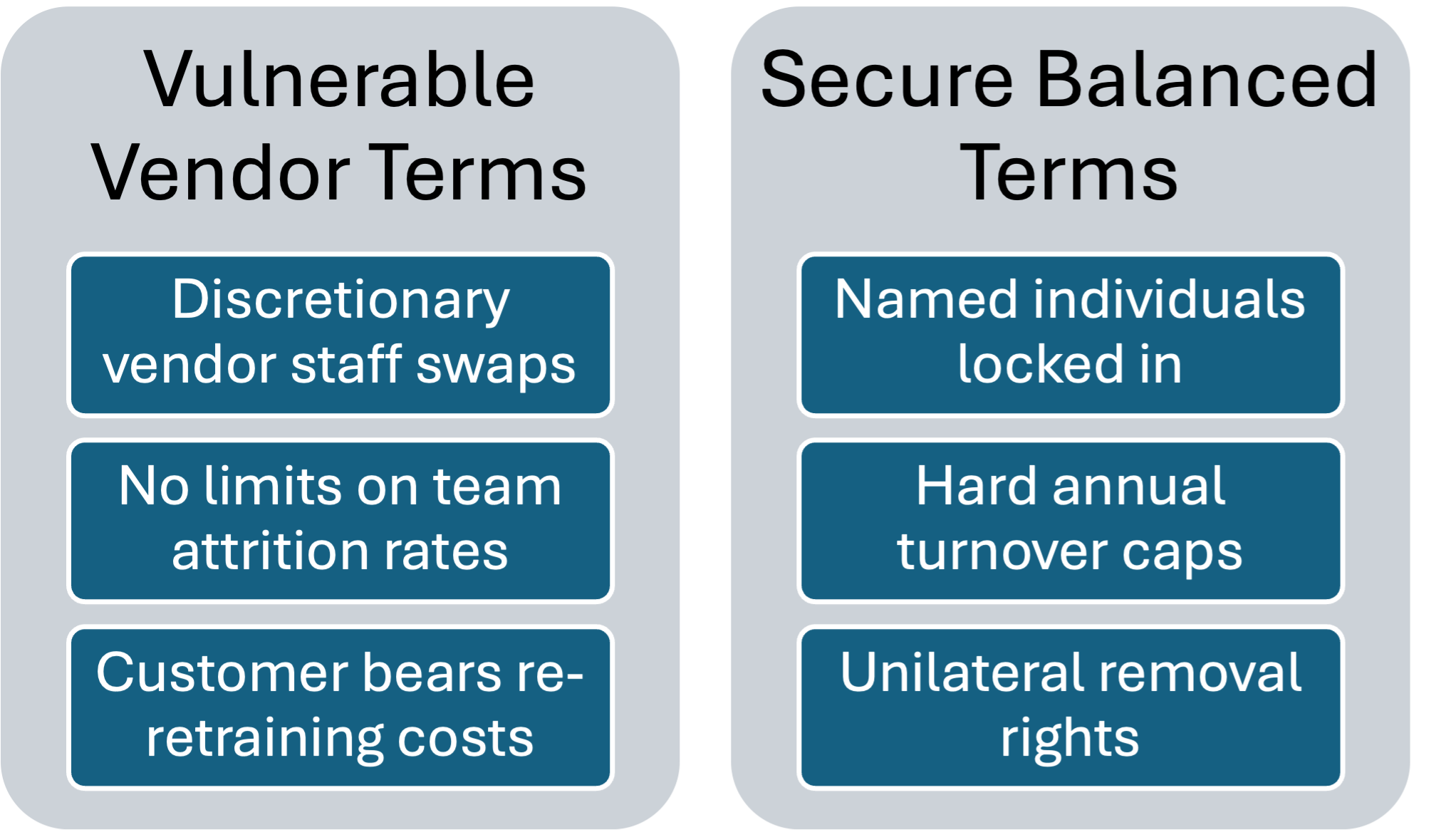
To control vendor behavior and insulate your project timelines, the agreement must include comprehensive Staff Turnover Constraints and Replacement Covenants. Corporate counsel should structure these clauses around three non-negotiable operational principles:
Restricted Removal Triggers: Named key personnel may only be removed from your account under highly specific, excusable circumstances, such as voluntary resignation from the vendor's firm, long-term sickness, disability, or termination of employment.
The Mandatory Right to Remove: If your project leads identify a performance issue, behavioral conflict, or capability gap with any assigned vendor employee, your enterprise must retain the absolute, unilateral right to demand their immediate removal and replacement, without needing to prove a technical breach of contract.
Strict Attrition Caps: The contract must enforce a hard limit on the overall percentage of team turnover permitted on your account within any rolling 12-month period (e.g., an annual team churn cap of 10% to 15%). Exceeding this baseline must automatically trigger service-fee discounts or represent a material default.
Contact Our Team
This briefing is provided by Palantir Advisors, a global business and legal consulting practice. If you have questions about this briefing, or if you would like to discuss how these issues may impact your business operations, please reach out to us here.