
executive briefings
Executive Briefing / October 2023
Enforcing Customer Audit Rights in Technology Transactions: Navigating Financial Oversight, Operational Compliance, and Supplier Cooperation Covenants
Executive Overview
When an enterprise outsources business-critical functions—such as data processing, cloud infrastructure management, or back-office digital operations—the purchasing company retains ultimate regulatory and operational accountability. While technology vendors routinely request extensive, unilateral rights to audit your internal networks for software over-usage, their standard contract templates rarely grant equivalent oversight back to the customer.
Accepting standard, vendor-favorable limitations on verification parameters leaves an enterprise severely exposed. Without comprehensive access rights, sourcing teams cannot verify billable metrics, validate data security baselines, or fulfill mandatory legal and regulatory compliance reviews. This briefing analyzes the critical legal traps hidden within one-sided vendor auditing frameworks and outlines practical, contractual strategies to secure transparent financial, operational, and regulatory oversight before signing.
Critical Risk Vector: The Blind Procurement Gap
The most common structural exposure in technology procurement is the lack of independent customer verification rights, leaving the enterprise completely dependent on the vendor's self-generated billing metrics and security logs.
The Exposure: Standard vendor terms routinely block customers from reviewing the supplier’s internal systems, pricing calculations, or data handling environments, citing vague intellectual property or cross-client confidentiality barriers.
The Transactional Impact: Sourcing managers are forced to accept invoices and compliance declarations blindly. If a provider quietly drops their security parameters or introduces hidden transactional calculations, the corporate customer remains entirely unaware until a catastrophic data breach occurs or a severe budget overrun is revealed during annual reviews.
The Contractual Remedy: Sourcing teams must hard-code a comprehensive, non-negotiable Customer Audit Right directly into the body of the master agreement. This framework must grant your enterprise the absolute right to conduct thorough financial, operational, and data security reviews of the services being provided.
Structural Stability Vector: Third-Party Cooperation, Cost Shifts, and the Compromise Loop
To control vendor behavior and insulate your operating budgets, your auditing framework must contain clear operational teeth, absolute third-party assignment rights, and robust cost-shifting triggers.
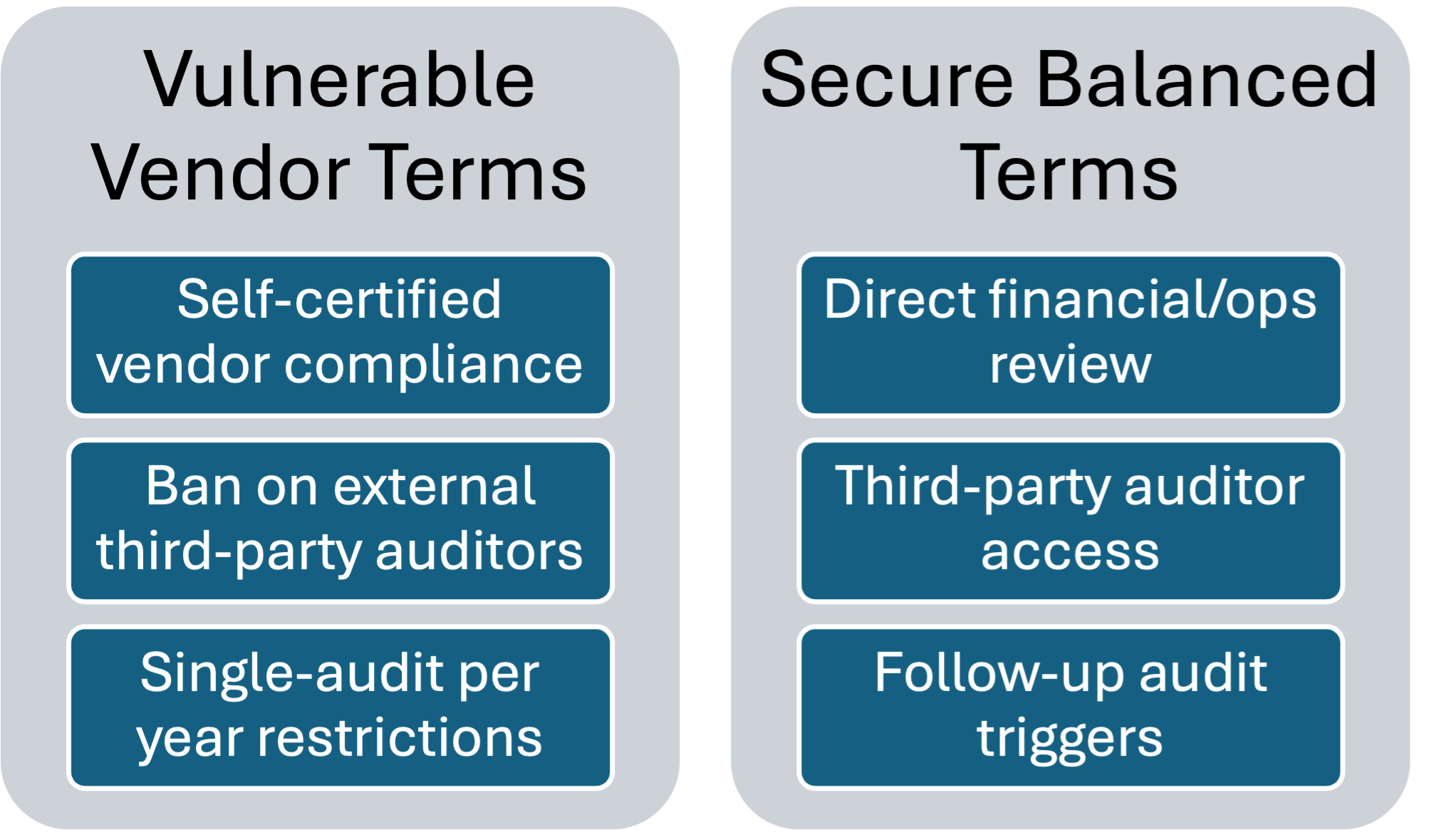
Transactional lawyers must structure these oversight covenants around four core operational principles:
Mandatory Third-Party Integration: The contract must state that your enterprise can perform reviews internally or appoint an independent third-party auditor, financial analyst, or regulatory consultant. The vendor must be contractually compelled to cooperate fully, share processing records, and provide system access keys without delay.
The Discrepancy Remedy Covenant: If an inspection identifies operational gaps, service level drops, or data security defects, the vendor must be legally required to implement remediation steps immediately at their sole expense.
Dollar-for-Dollar Cost Rebalancing: If a financial audit reveals that the vendor has overcharged your business, the provider must instantly refund the entire overage amount. Crucially, if the overcharge crosses a specified boundary (e.g., exceeding 2% to 5% of the true billable volume), the supplier must also pay for the entire cost of the audit.
The Follow-Up Audit Compromise: Software providers frequently attempt to limit customer inspections to a strict maximum of "once per rolling 12-month period." To close this loophole while remaining market-aligned, negotiate a follow-up exception: if an audit reveals any technical non-compliance or financial error, your firm retains the absolute right to run immediate, unlimited follow-up reviews to verify the provider has corrected the issue.
The Regulatory Overrule Pass: The agreement must explicitly clarify that any arbitrary frequency limits or advanced notice windows are automatically overruled if an audit is formally mandated by a government agency, data privacy regulator, or legal compliance authority.
Strategic Action Items for Corporate Sourcing Teams
Secure Independent Review Rights: Ensure your master agreements grant your team explicit rights to evaluate the financial accuracy and operational security of the vendor’s systems.
Carve Out Regulatory Access Passes: Insert non-negotiable terms stating that frequency limits are void if an audit is required to satisfy statutory government rules or international data oversight mandates.
Hardcode the Audit Cost-Shift Clause: Insert explicit terms forcing the vendor to reimburse your company for all independent auditor fees whenever an overcharge threshold is breached.
Lock In Compulsory Supplier Handoffs: Require the technology provider to deliver raw ledger sheets, transaction counts, and technical records directly to your designated third-party inspectors without delay.
Contact Our Team
This briefing is provided by Palantir Advisors, a global business and legal consulting practice. If you have questions about this briefing, or if you would like to discuss how these issues may impact your business operations, please reach out to us here.