
executive briefings
Executive Briefing / October 2022
Optimizing Long-Term Vendor Accountability: Deploying Liability Cap Refresh Mechanisms to Maintain Commercial Balance and Performance Incentives
Executive Overview
In long-term technology transactions, such as multi-year cloud infrastructure or enterprise platform agreements, the Limitation of Liability (LoL) provision is a primary point of negotiation. Standard vendor templates routinely seek a single, fixed liability cap for the entire duration of the contract, frequently tied to a historical spend metric.
Accepting a static cap creates a hidden operational exposure over time. As an agreement progresses, early-year service failures or minor indemnification claims can erode or completely exhaust the vendor's financial liability. Once a cap is depleted, the provider has little economic motivation to perform or maintain strict service levels. Protecting the enterprise requires moving away from static limits toward a structured, refreshing liability cap framework that helps ensure the vendor retains meaningful financial stakes throughout the lifecycle of the engagement.
Critical Risk Vector: The Cap Exhaustion Loophole
A primary vulnerability in fixed liability frameworks is the "accountability deficit" that occurs after a claim is settled or a series of service failures accumulate.
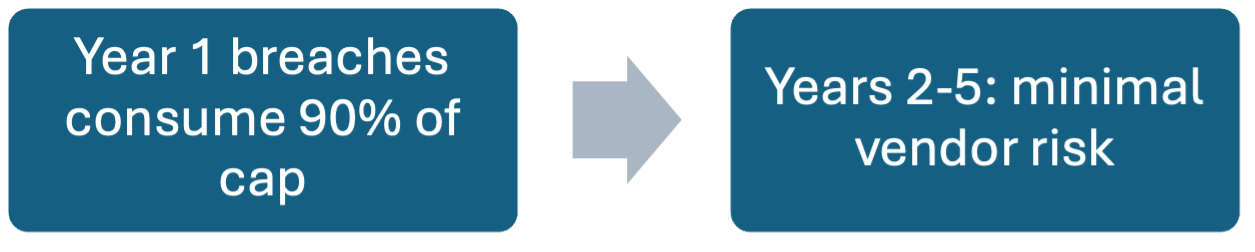
The Exposure: Under a standard, un-refreshing cap, every dollar paid out by a vendor for a breach permanently reduces the remaining financial protection available to the customer. If a vendor exhausts 90% of the cap during a difficult implementation phase, the customer is left with virtually no financial recourse for major performance failures in subsequent years.
The Transactional Impact: With the financial threat of breach effectively removed, underperforming suppliers may treat continuing contractual obligations as optional. Enterprise sourcing teams can find themselves tied to a supplier that has zero economic downside for non-performance, leaving the customer to absorb all ongoing operational losses and migration costs.
Structural Stability Vector: The Mechanics of a Refreshing Cap
To preserve long-term operational leverage, corporate negotiating teams should consider pushing for an automatic liability cap refresh mechanism rather than a single, aggregate lifetime cap.
Static Contract Cap (High Risk)
Refreshing Liability Cap (Balanced)

Strategic Drivers for the Refreshing Cap
Sourcing and legal teams should consider prioritizing the refresh structure based on three critical commercial advantages:
Maintaining Permanent "Skin in the Game": Automatically resetting the liability cap—either annually or on a per-event basis—helps ensure that the vendor faces a consistent financial penalty for non-performance on day one thousand just as they did on day one. This continuous exposure helps align the vendor's ongoing operational focus with your enterprise goals.
Insulating Future Contract Years from Early Failures: Complex platform rollouts often suffer from initial integration friction or data migration errors. A refreshing cap ensures that the financial liabilities incurred during a turbulent launch phase do not deplete or compromise the insurance and risk protections required for steady-state operations in later years.
Avoiding Artificial Contract Inflation: When facing a static lifetime cap, sourcing teams often feel compelled to demand an excessively high initial cap (e.g., 5x or 10x annual spend) to cover potential multi-year risks. This approach frequently stalls negotiations. A refreshing cap allows teams to agree to a lower, more palatable annual limit (e.g., 1x or 2x annual spend) while securing substantial aggregate protection over a multi-year timeline.
Enhanced Risk-Mitigation Controls for Cap Management
For critical, high-value systems where continuous vendor operational accountability is targeted, sourcing teams should consider deploying these additional structural safeguards to govern the refresh process:
Incorporate an Annual Automatic Reset Clause: Negotiating teams should consider seeking language stating that on each anniversary of the contract effective date, the limitation of liability automatically resets to its original baseline value, irrespective of any claims made or paid during the preceding 12 months.
Structure a Per-Event Sub-Cap Framework: As an alternative or supplement to an annual reset, teams can explore a "per-event" liability structure. This framework dictates that the cap applies anew to each separate, distinct incident of breach, preventing a vendor from grouping unrelated operational failures under a single liability umbrella.
Enforce a Cap Deletion Termination Right: Sourcing teams should consider pushing for an explicit right to terminate the agreement for cause if the vendor's accrued liability exceeds a specific threshold (e.g., 50% of the current cap) and the vendor refuses to sign a contract amendment to prematurely refresh or elevate the cap within a strict cure period. This provides a direct exit path if a vendor attempts to operate under an exhausted limit.
Establish an Escrow or True-Up Trigger for Active Litigation: For high-exposure contracts under active dispute, consider a mechanism where any payout that lowers the available cap below a critical operational threshold triggers a mandatory "true-up" period. This requires the vendor to provide alternative security, such as a letter of credit or escrow funding, to maintain the baseline risk allocation while the primary contract continues.
Contact Our Team
This briefing is provided by Palantir Advisors, a global business and legal consulting practice. If you have questions about this briefing, or if you would like to discuss how these issues may impact your business operations, please reach out to us here.